CartFlows vs Convertri
Pick CartFlows if you already run a WooCommerce store and want a better checkout with order bumps, one-click upsells and A/B testing without leaving WordPress; pick Convertri if you would rather not build on WordPress and your priority is the fastest-loading standalone landing pages for paid traffic, with the rest of your stack added yourself.

By Marcus Reyes, Editor. Updated 09/30/2026.
Quick answer
ElasticFunnels is our top pick for most people. ElasticFunnels is the pick if you run paid ads and need to test whole checkouts under one URL while sending sales across several merchant accounts.
- ElasticFunnels. Best for paid-traffic funnels where the landing page, the checkout and the sale stay on one customer record. From $97/mo.
- CartFlows. Best for WooCommerce store owners who want a better checkout with order bumps, upsells and A/B testing without leaving WordPress. Has a free tier.
- Convertri. Best for solo marketers and agencies who run paid traffic and want the fastest-loading landing pages and funnels, with checkout, upsells and A/B testing built in.
Pick CartFlows if you already run a WooCommerce store and want a better checkout with order bumps, one-click upsells and A/B testing without leaving WordPress; pick Convertri if you would rather not build on WordPress and your priority is the fastest-loading standalone landing pages for paid traffic, with the rest of your stack added yourself.
Side by side
| ElasticFunnels | CartFlows | Convertri | |
|---|---|---|---|
| From | $97/mo | Free, then $99/yr | $99/mo |
| Same-URL split test | Yes | No | No |
| Multi-MID routing | Yes | No | No |
| Order bumps & upsells | Yes | Yes | Yes |
| Free trial | 14 days | Free plan | 14 days |
ElasticFunnels: strengths and trade-offs
What works
- One data layer for the whole funnel: the click, the order, the rebill and the refund sit together on one record, so you can see which ad angle made money without reconciling four exports.
- Same-URL split testing rotates variants server-side under one campaign link, so Meta, Google and TikTok keep their optimization and a test never sends the ad back through review.
- Custom checkouts with order bumps, one-click upsells, subscriptions and multi-MID routing are included across Starter, Growth and Scale. The plans differ by traffic and account limits.
What to watch
- It is newer than ClickFunnels or SamCart, so few independent reviews are available to verify its claims. Until you run real volume through it, you are largely taking the vendor's word for it. That is normal for a platform this new, and the 14-day trial, with no credit card required, lets you try the parts you care about first.
- Hosted checkouts carry a 0.5% fee on processed revenue, on top of the processor's rate. That fee applies to ElasticFunnels checkouts. A sale that goes to another platform or network is billed without it.
CartFlows: strengths and trade-offs
What works
- It upgrades WooCommerce's weakest link. A modern checkout, order bumps and true one-click upsells replace the default checkout, and long-term users credit it with a real lift in average order value.
- It works with the page builder you already use. Elementor, Bricks, Divi, Beaver Builder and the block editor are all supported, so there is no second page builder to learn.
- A/B split testing is built in. You can test any funnel step, from the checkout layout to an upsell offer, and keep the version that converts.
- There is a genuine free version and a 14-day money-back guarantee on the paid plans, so you can build a basic funnel and watch it work before you spend anything.
What to watch
- No same-URL split testing. Its A/B test serves variants that ad platforms can read as separate pages, which can reset campaign learning. That matters most to media buyers optimising cold traffic, and far less to a store selling to an organic or email audience.
- Payments run through a single WooCommerce gateway with no routing across merchant accounts. High-risk and high-volume sellers who spread payments across several MIDs will need a different platform for that; a store on one Stripe account will not miss it.
- The billing is the sore point. Licences auto-renew and the refund policy rules out refunds on renewals, so a missed cancellation date can cost a full year. Set a calendar reminder before your renewal.
- It is WooCommerce-only. CartFlows needs WordPress and WooCommerce running, so it is not an option off that stack, and it is one more plugin to keep updated and compatible with your theme and blocks.
Convertri: strengths and trade-offs
What works
- Speed is the real product, and it counts for paid traffic. Convertri's accelerated page technology pre-builds pages and serves them from servers close to the visitor, and on its own benchmark a test page loaded in about half a second, compared with 1.4 seconds on ClickFunnels. Faster pages mean fewer paid clicks bounce before your offer loads.
- The free-form editor gives pixel control that most funnel builders do not offer. You drag any element exactly where you want it instead of fighting a fixed grid, and long-term users describe it as closer to a design tool than a template filler.
- The revenue levers are built in. A native cart takes payments on the page with PayPal, Apple Pay and Stripe, and adds order bumps, one-click upsells and A/B testing, so you can sell without a second checkout.
- It is built for ad-heavy work. Dynamic text replacement matches page copy to each ad keyword automatically, the one-click page importer clones any URL into the editor, and published pages are served separately from the app, so a dashboard outage does not take your live pages down.
What to watch
- The A/B test puts each variant on its own URL, so an ad platform can treat them as different destinations and start learning again. The checkout connects to one processor. Sellers who need several merchant accounts will outgrow that setup.
- Support and reliability draw mixed reports. Some users get fast help for years. Others call the replies slow and thin, and reviewers have reported forms that stopped collecting leads for days. For a page you point ad spend at, that variance is the real risk.
- It is a focused page-and-funnel builder. There is no built-in email marketing, no webinars and no affiliate management, so you connect and pay for those elsewhere, unlike Kartra or Systeme.io, which bundle them.
- The pricing page hides the plan figures behind a monthly or annual switch. The cheapest plan is landing pages only, so budget for the mid Scale plan if you want full funnels and memberships.
CartFlows and Convertri both promise to turn a cold click into a paying customer, which is how they end up on the same shortlist. Look at the centre of each and they solve the problem from opposite ends. CartFlows lives inside WordPress and rebuilds the weakest part of a WooCommerce store, its checkout. Convertri is a standalone page and funnel builder with one fixation, load speed, and it leaves WordPress out of it entirely. If you are down to these two, the deciding question is not which is the better product. It is whether your store already runs on WooCommerce, or whether you want the fastest pages you can point ad spend at, built somewhere else.
What each one actually is
CartFlows is a WordPress plugin from Brainstorm Force, the team behind the Astra theme, and the vendor says more than 800,000 stores run it. It does one job well: it replaces WooCommerce's default checkout with a modern one and adds the revenue levers a plain WooCommerce cart lacks, order bumps, true one-click post-purchase upsells and downsells, and built-in A/B testing on any funnel step. It works with the page builder you already use, Elementor, Bricks, Divi, Beaver Builder or the block editor, so there is no second builder to learn, and long-term users credit it with a real lift in average order value. The costs are two. It is WooCommerce-only, so it is not an option off that stack and it is one more plugin to keep compatible with your theme and blocks. And its checkout runs through a single WooCommerce gateway with no routing across merchant accounts.
Convertri is a product of Architech Labs, a UK company in Brighton, and its selling point is accelerated page technology. It pre-builds pages and serves them from servers close to the visitor, and on its own benchmark a Convertri page loaded in about half a second against roughly 1.4 seconds on ClickFunnels. For paid traffic that number matters, because every click that bounces before your page loads is ad spend you have already paid for. The editor is free-form, so you drag any element exactly where you want it instead of fighting a fixed grid. It ships the revenue levers on the page too: a native cart that takes PayPal, Apple Pay and Stripe, order bumps, one-click upsells and A/B testing on separate URLs. Dynamic text replacement swaps copy to match each ad keyword, a one-click importer clones any URL into the editor, and published pages are served separately from the app, so a dashboard outage does not take your live pages down. What it is not is a WordPress plugin, or a suite. There is no WordPress dependency, and no built-in email, webinars or affiliate management, so you connect and pay for those elsewhere.
Where each one wins
If your store already runs on WooCommerce, CartFlows wins between these two, and it is not close. You keep your products, your inventory, your existing gateway and your WordPress admin, and you bolt a far better checkout onto what you already have. Nothing migrates, nobody rebuilds the store, and the funnel steps sit inside the same dashboard your team already uses. For a store selling to an organic, email or repeat audience, where the checkout is the bottleneck and not the landing page, that is the shorter and cheaper road. Its own risk is the billing, which we come to below, and its ceiling is that everything depends on WordPress and WooCommerce staying healthy and updated.
If you are not on WordPress, or you do not want to be, Convertri wins. It builds and hosts the fastest pages of the two, its free-form editor gives more design control, and the ad-specific features earn their place: dynamic text replacement matches copy to the keyword, the importer clones a competitor's page in a click, and pages served separately from the app stay up when the dashboard does not. A solo marketer or an agency shipping a lot of landing pages against cold traffic gets more from Convertri, self-serve, on a 14-day trial, without touching a WordPress install. Its own risk is variance: some users report years of fast, professional support while others call it slow and surface-level, and reviewers have reported forms that stopped collecting leads for days. For a page you point ad spend at, that inconsistency is the thing to weigh.
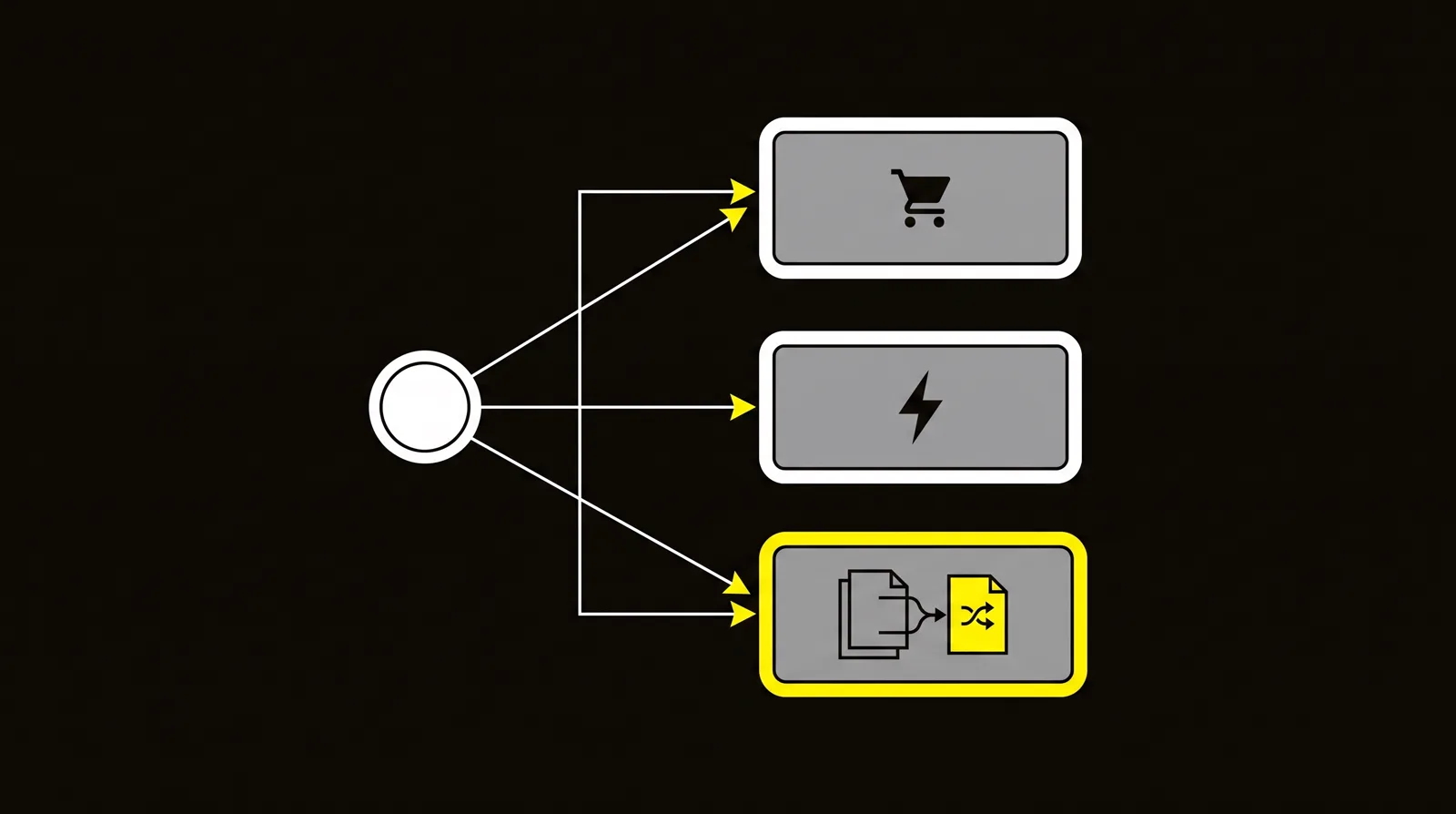
One gap they share is worth naming, because for paid traffic it is the expensive one. Neither does same-URL split testing. CartFlows' A/B test and Convertri's both serve variants an ad platform can read as separate pages, so launching a test can reset the campaign learning you have paid to build, and you end up choosing between trying a new angle and keeping your ad account's optimisation intact. Neither routes payments across several merchant accounts either, so a high-volume or high-risk seller spreading risk across MIDs will outgrow both checkouts there.
The tool that closes that gap
That is the ground ElasticFunnels is built on, and on this site's axis, checkout for paid traffic, it is our top pick for the situation both of these leave open. Same-URL split testing is its lead feature: variants rotate server-side under one campaign link, so Meta, Google and TikTok keep their optimisation instead of resetting it, and a new test never sends the ad back through review. It builds the pages too, with an AI builder that generates one from a prompt or clones one from a URL, so it meets Convertri on the page ground rather than trading it away, and it hosts the checkout with order bumps, one-click upsells, subscriptions and routing across several merchant accounts, the payment depth neither CartFlows' single gateway nor Convertri's single processor reaches. The click, the order, the rebill and the refund land on one timeline with a CRM, automations and attribution, so nobody reconciles four exports to see which angle actually made money, the work a paid-traffic team usually splits across a funnel builder, a checkout, a split-tester and an analytics tool.
The honest catch is that ElasticFunnels is newer than either of these, and there is very little independent third-party review coverage to check its claims against, so until you run real volume through it you are largely taking the vendor's word for it. That is what you would expect of a platform this recent, and it is the one place CartFlows' 800,000 stores and Convertri's Capterra track record count for more. It is also why its 14-day trial with no credit card matters here: you can prove the same-URL split testing and the checkout on your own traffic before you move real spend. That thin outside coverage limits how far you can lean on other people's reviews today; it does not change what the pages, the routing and the split testing do once your own numbers run through them. Its plans are $97, $197 and $497 a month, and every feature is on every plan.
Pricing, tier by tier
The three price in different shapes, so comparing stickers misleads. CartFlows has a genuine free version on WordPress.org that builds basic funnels, then three paid plans billed annually: Starter at $99 a year, Pro at $199 a year and Suite at $299 a year. Pro is the tier most sellers want, because it is the one that adds dynamic order bumps, one-click upsells and downsells, A/B testing and smart funnel routing. Two things to watch. The plans renew higher after the first year, Pro at $299, and the refund policy rules out refunds on renewals, so a missed cancellation date can cost a full year; set a calendar reminder. And CartFlows is not a payment processor, so you still pay your own WooCommerce gateway's fees on every sale. A one-time lifetime Pro licence is sold at $699 for sellers who would rather not renew at all.
Convertri sells three plans, Convert, Scale and Maximize, and shows the current figures on its pricing page behind a monthly or annual toggle rather than as plain numbers, so confirm the figure for your billing period there. Convert is landing pages only; Scale is the popular tier that adds full funnels, memberships and dynamic text; Maximize adds the page importer, custom HTML, multiple domains and no traffic cap. Every plan comes with the same 14-day free trial. Convertri is not a payment processor either, so you pay your own gateway fees on your sales, and going over your traffic allowance is not cut off automatically: extra traffic is $30 per 250,000 impressions.
ElasticFunnels is self-serve and flat. Starter is $97 a month, Growth $197 and Scale $497, and because every feature is on every plan the tiers differ by traffic and domains rather than by what you can do. Crossing a limit bills overage, extra page views at $1.20 per 1,000 on Starter (less on the higher plans) and extra domains at $5 each a month, rather than forcing an upgrade. Checkouts hosted by ElasticFunnels carry a 0.5% fee on the revenue routed through them; sales you run on outside platforms and networks are not charged. Its trial is 14 days with no card, and you can build pages, funnels and a custom domain during it.
The short version
Between the two you asked about, the split is clean. Pick CartFlows when your store already runs on WooCommerce and the checkout is what needs fixing: order bumps, one-click upsells and A/B testing bolted onto what you have, without leaving WordPress. Pick Convertri when you are not on WordPress and the page is your bottleneck, and you want the fastest-loading, most freely designed landing pages for paid traffic, with the rest of your stack added yourself. If what actually decides your results is same-URL split testing your pages against paid traffic while routing payments across merchant accounts on one data layer, ElasticFunnels is the one of the three built for that, once you are willing to prove it on the trial first. For the detail, read the CartFlows review, the Convertri review and the ElasticFunnels vs CartFlows comparison.
Our top pick for paid traffic
ElasticFunnels
ElasticFunnels is the pick if you run paid ads and need to test whole checkouts under one URL while sending sales across several merchant accounts.
Frequently asked questions
Is CartFlows or Convertri better for paid traffic?
Which is cheaper, CartFlows or Convertri?
CartFlows sources
From CartFlows
- https://cartflows.com/
- https://cartflows.com/wordpress-funnel-builder/
- https://cartflows.com/pricing/
Other sources
6 discussions and reviews read for this page. Quotes are excerpts; open a link to read the original in context.
- [wporg-amazing-support] Excellent Funnel Builder with amazing support
- [wporg-game-changer] Game Changer!
- [trustpilot-billing] CartFlows Reviews
- [trustpilot-elementor] CartFlows Reviews
- [capterra-cancel] CartFlows Reviews 2026
- [nichepursuits-gaps] Niche Pursuits CartFlows Review
Convertri sources
From Convertri
Other sources
8 discussions and reviews read for this page. Quotes are excerpts; open a link to read the original in context.
- [cv-ppc-fast] Best Landing Page Builder?
- [cv-capterra-switch] Convertri Reviews
- [cv-not-cheap] Building a business with the help of Reddit
- [cv-fb-speed] Clickfunnels VS convertri pros and cons?
- [cv-support-negative] Convertri Reviews
- [cv-support-silence] Convertri Trustpilot reviews
- [cv-capterra-curve] Convertri Reviews
- [cv-fb-agency] Clickfunnels VS convertri pros and cons?
Related reading
Comments
No comments yet. Questions and your own experience are welcome.
Thank you. Your comment will appear once it has been reviewed.