You have probably run into CartFlows the way most WooCommerce store owners do. You wanted a real checkout, not the default WooCommerce one, and every WordPress thread pointed at the same plugin. So the question you arrived with is the right one. Is CartFlows the genuine article, and will you regret building your funnel on it?
The short version: it is real, it is not a rebrand of someone else's code, and the vendor says more than 800,000 stores run it. It is made by Brainstorm Force, the team behind the Astra theme, which has shipped WordPress products since 2009. Whether you regret it comes down to one thing: how you get your traffic. This site ranks checkout and funnel software for people who buy that traffic with ads, and on that test CartFlows is a good fit for some readers and the wrong tool for others.
What CartFlows actually is
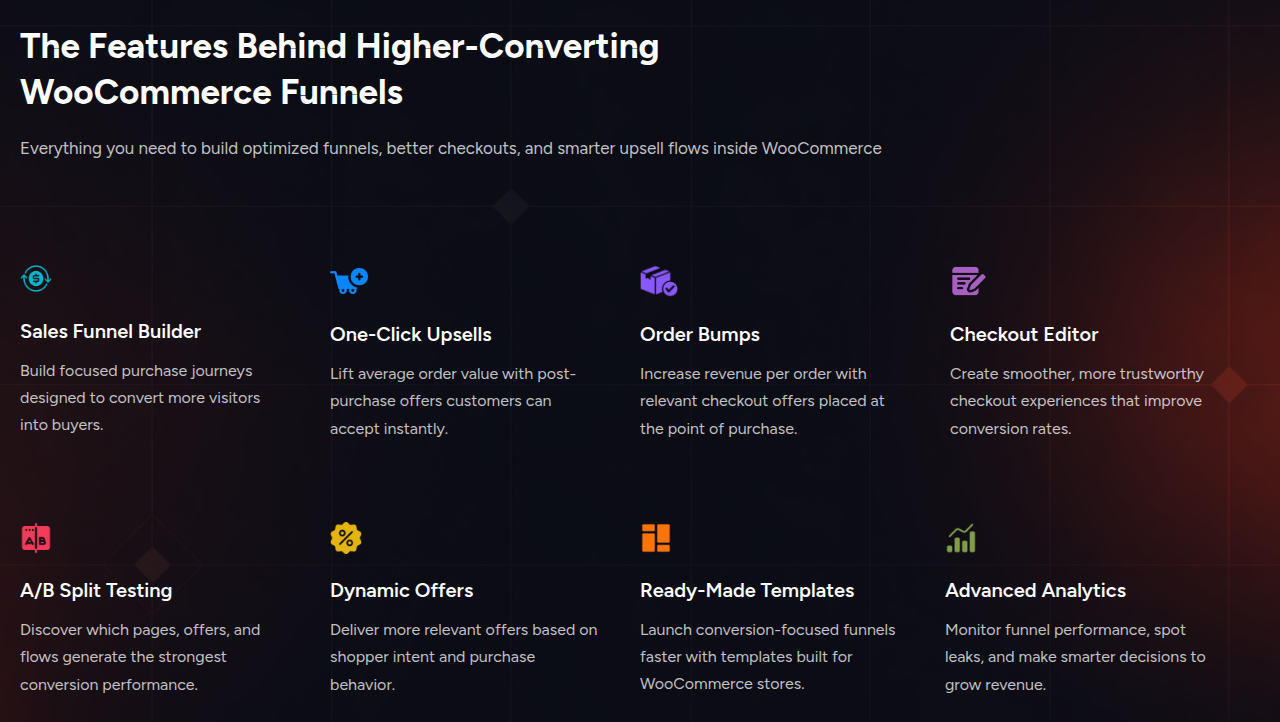
CartFlows is a WordPress plugin, not a hosted platform. It sits on top of WooCommerce and replaces the part of the buying journey where most revenue leaks: the cart and checkout. In place of WooCommerce's default checkout it gives you a modern multi-step or two-column checkout, order bumps at the point of purchase, true one-click post-purchase upsells and downsells, and A/B split testing on any funnel step.
Because it lives inside WordPress, it works with the page builders you already use: Elementor, Bricks, Divi, Beaver Builder, Spectra and the block editor. You are not learning a new page builder. You are adding funnel logic to the one you have. That is the whole appeal, and it is a real one.
In 2025 the vendor turned CartFlows from a single plugin into a suite. The funnel builder is still the core product, joined by Modern Cart, Cart Abandonment Recovery, Power Coupons and Variation Swatches. You can buy the funnel builder on its own or take the whole bundle.
Where it fits, and where it does not
If you run an established WooCommerce store and your traffic is mostly organic, email or repeat customers, CartFlows does exactly what you want and does it well. Order bumps and one-click upsells raise average order value, the checkout is cleaner than stock WooCommerce, and you can split-test to find what converts. Reviewers on Capterra rate it 4.4 out of 5 and describe a well-structured interface that makes funnels easy to set up.
If you are a media buyer scaling cold traffic, two gaps matter. First, CartFlows has no same-URL split testing. Its A/B test serves variants that ad platforms can read as separate pages, so a split test can reset the learning phase on your campaigns. Second, payments run through whatever single WooCommerce gateway you have connected, whether that is Stripe, PayPal, Square, Authorize.net, Mollie or WooCommerce Payments. There is no automatic routing across several merchant accounts, which is what high-risk and high-volume sellers use to spread risk and keep one frozen processor from stopping their revenue. CartFlows does not do that, and it does not claim to.
So the honest framing: CartFlows is a checkout and funnel upgrade for a WooCommerce store, not a payments and routing platform for a paid-traffic operation. For that second job, weigh the platforms in our best checkout and funnel software ranking instead.
The catch buyers keep hitting
The loudest complaints about CartFlows are not about the software. They are about billing. Licences auto-renew, and the vendor's own refund policy states that renewal payments cannot be refunded. Reviewers on Trustpilot describe missing the cancellation window by a day and being charged the full renewal with nothing returned. Support is email only, and reports on response times are mixed: some users call it fast and genuinely helpful, others describe slow replies or silence. None of this is unusual for a WordPress plugin business, but it is worth a calendar reminder before your renewal date.
Is it any good under the hood?
For years the knock on CartFlows was that it had rested on its laurels while newer WooCommerce funnel plugins moved faster. The 2025 rebuild answered a lot of that: reviewers note it now loads its resources only when a funnel step needs them, rather than adding weight to every page. Compatibility with the newer WooCommerce cart and checkout blocks has been a rough edge in developer threads, so if your theme leans on those blocks, test your checkout after install before you send traffic to it.