Rebill revenue calculator: what a trial or continuity offer earns after declines and chargebacks
A cheap trial can still lose money once continuity bills decline and disputes reverse the charges that cleared. Type your own orders, prices, cycles and rates. Nothing on this form is a built-in benchmark.
Net revenue is approved trial dollars plus approved continuity dollars, minus disputed amounts, processing fees, dispute fees and any fee you pay when a bill declines. Calculate your net revenue. The chargeback ratio beside that figure is disputes divided by approved charges. Check that percent on the chargeback ratio checker.
Your trial or continuity offer
Paid trials are the approved first charges. The arithmetic runs in this browser.
Enter your orders, prices, cycles, rates and fees, then press Calculate net revenue.
How a continuity offer is counted
Start with the paid trials you enter. Each one is an approved charge at the trial price. Before every continuity cycle, the cancel rate removes that share of the people still on the book, and those people are never billed. Of the attempts that remain, some fail at the decline rate you typed. Those buyers leave later cycles, and a decline fee applies if you typed one. Approved customers pay the continuity price and stay eligible for the next cycle. The same chargeback rate then marks that share of every approved charge, trial and continuity, as a dispute.
A dispute takes the sale amount back out. The processing percent and the per-charge fee stay on that approved charge, and the dispute fee is added on top. A decline never enters the gross, because nothing was collected.
A failed attempt drops that buyer from later cycles. The form has no retry field.
Set the cycle count to zero when you want the trial charge alone.

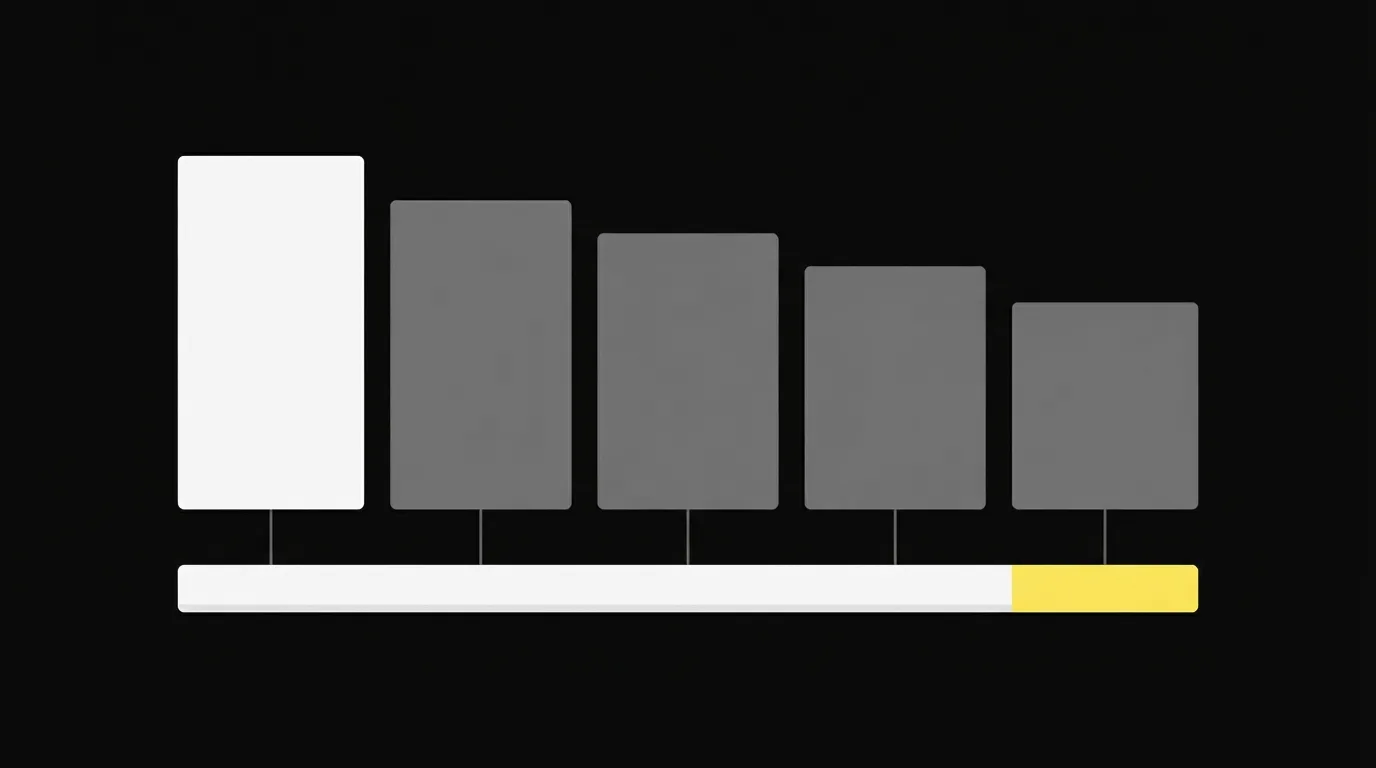
The bars above are the shape of that decay. Each cycle is shorter because cancellations and declines have already removed people, and the yellow piece is what fees and disputes take off the amount that was approved.
One sample you can check by hand
Type 1,000 paid trials, a $9 trial, a $69 continuity price, 3 cycles, a 50% cancel rate, a 20% decline rate, a 1% chargeback rate, processing at 3.5% plus $0.30, a $15 dispute fee and a $0 decline fee. The trial line approves all 1,000 charges, $9,000 gross. One percent of those charges are disputed, which is 10 disputes and $90 reversed. Processing on the trial is $615, and the dispute fees are $150.
Cycle one bills half of the 1,000, so 500 attempts. Twenty percent decline, which is 100 failed attempts, and 400 approvals at $69, or $27,600. Cycle two starts from those 400 approvals, bills 200, and approves 160, which is $11,040. Cycle three bills 80 and approves 64, which is $4,416. Across the three cycles that is 624 approved continuity charges and $43,056 gross. Declined attempts total 156, and at a $0 decline fee they change the dollars only by never collecting.
Add the trial and the continuity gross and you have $52,056. Disputes are 1% of every approved charge, 16.24 expected disputes, reversing $520.56. Processing on all 1,624 approvals is $2,309.16. Dispute fees are $243.60. Subtract those three from the gross and the net is $48,982.68. On 1,000 paid trials, that is the per-thousand figure as well.
The chargeback ratio is 16.24 divided by 1,624 approved charges, which is 1.00%. It matches the rate you would have typed because that rate was applied to every approval. The count a media buyer feels is the 16.24 disputes on the original 1,000 trials, and that count climbs when later cycles add more approved bills. Trial to rebill conversion on this sample is 40%: half are still active before the opening rebill, and 80% of those attempts approve.
Where the money sits on a continuity offer
In that sample the trial contributes $9,000 gross and the continuity bills contribute $43,056.
Most of the net comes from people who stayed and whose cards approved. By cycle three that is 64 approvals out of the original 1,000. A higher continuity price moves the net more than the same change in the trial price, as long as the cancel rate and the decline rate stay where you set them.
Drop the cycle count to 1 and only the opening rebill remains: 400 approvals, $27,600, plus the trial. The later cycles in the sample are real money ($11,040 and then $4,416) and they are also where a buyer who already disputed can dispute again, because each approval is its own charge. If your statement shows disputes clustered on renewals, raise the chargeback rate you type. The form has one rate for every approval, so a single rate is a blend across the trial and the renewals.
Trial to rebill conversion
Divide first-cycle continuity approvals by paid trials and you have the conversion from trial to rebill. It equals the share who do not cancel before that bill, times the share of attempts that approve. Later cycles repeat the same two cuts against whoever is left. A 40% opening conversion still leaves 64 approvals at cycle three in the sample.
A buyer who cancels is never billed. Declines are attempts the gateway refused, which is why that fee has its own field. Put the fee your gateway charges on a failed rebill, or type 0 when the statement has no such line. The processing percent and the per-approval fee apply only to charges that approved, including ones that are later disputed.
The chargeback ratio to take to the checker
Divide expected disputes by approved charges. That is the percent in the result. Visa's Acquirer Monitoring Program fact sheet defines its VAMP ratio as fraud reports plus disputes, divided by settled card-not-present transactions, with some pre-dispute and Compelling Evidence 3.0 cases left out depending on when the data arrives. This result has no fraud-report field, so it is the dispute share only. Add the fraud reports your acquirer can see before you treat the percent as a VAMP figure.
Mastercard divides the month's chargebacks by the prior month's sales, as Braintree's Excessive Chargeback Program summary describes it. A continuity book that is still adding trials will show a higher Mastercard ratio than the same-month percent from this form, because last month's smaller sales sit in the denominator. The chargeback ratio checker has a field for last month's transactions and shows where that percent sits for Visa and for Mastercard.
How to read a bad net
If the net per thousand paid trials is thin, look at which field pulled it down. A high cancel rate shrinks attempts before any fee. A high decline rate shrinks approvals and can add a decline fee on top. A high chargeback rate reverses the sale and still leaves the processing fee on that charge. Raising the continuity price increases both the gross and the dollars a single dispute reverses, so run the same rates twice, once at each price you are considering, and compare the two nets.
My take: I would keep the offer in market only when that net still covers the media cost you already track per trial, and I would open the ratio checker before asking for another merchant account. Extra accounts split the dispute count. They leave the ratio where it is. The MID capacity planner turns monthly sales, a per-account cap and this ratio into how many accounts to open. For a subscription, the renewal stays on the account that stored the card, which is the subject of MID routing for subscription and rebill offers.
What the arithmetic leaves out
Refunds that stay refunds, and never post as chargebacks, sit outside this sum. If you refund often, lower the price you expect to keep, or raise the dispute rate when those refunds turn into disputes. Affiliate payouts, shipping and ad spend sit outside it too. Subtract them from the net yourself. A rolling reserve is also outside this sum. The rolling reserve calculator applies a percent and a hold to monthly card volume and lists the balance month by month.
The form stops at 24 cycles. That covers two years of a monthly book.
Expected disputes can be fractional. The 10 trial disputes and the fractional disputes on later cycles are an average across many cohorts. Your processor's report is the record, and month six will post whatever that report shows.
If you want to bring the dispute ratio down, the guide to chargeback management software compares alert products. The subscription billing guide compares the platforms that run the schedule. Other guides in this section are on the Best of page. Open the chargeback ratio checker with this percent once you have it.
Sources
Frequently asked questions
Does the calculator assume a cancel rate or a decline rate?
Why is the chargeback ratio the same percent I typed?
What does trial to rebill conversion mean here?
Where do I compare the ratio with Visa and Mastercard?
Written by
Last checked 2026-11-20
Comments
No comments yet. Questions and your own experience are welcome.
Thank you. Your comment will appear once it has been reviewed.