Rolling reserve calculator: how much cash a high-risk merchant account holds back
The agreement keeps a percent of card sales and pays that slice back months later. You need the cash missing from each deposit, and the month the first slice returns, before the ads scale.
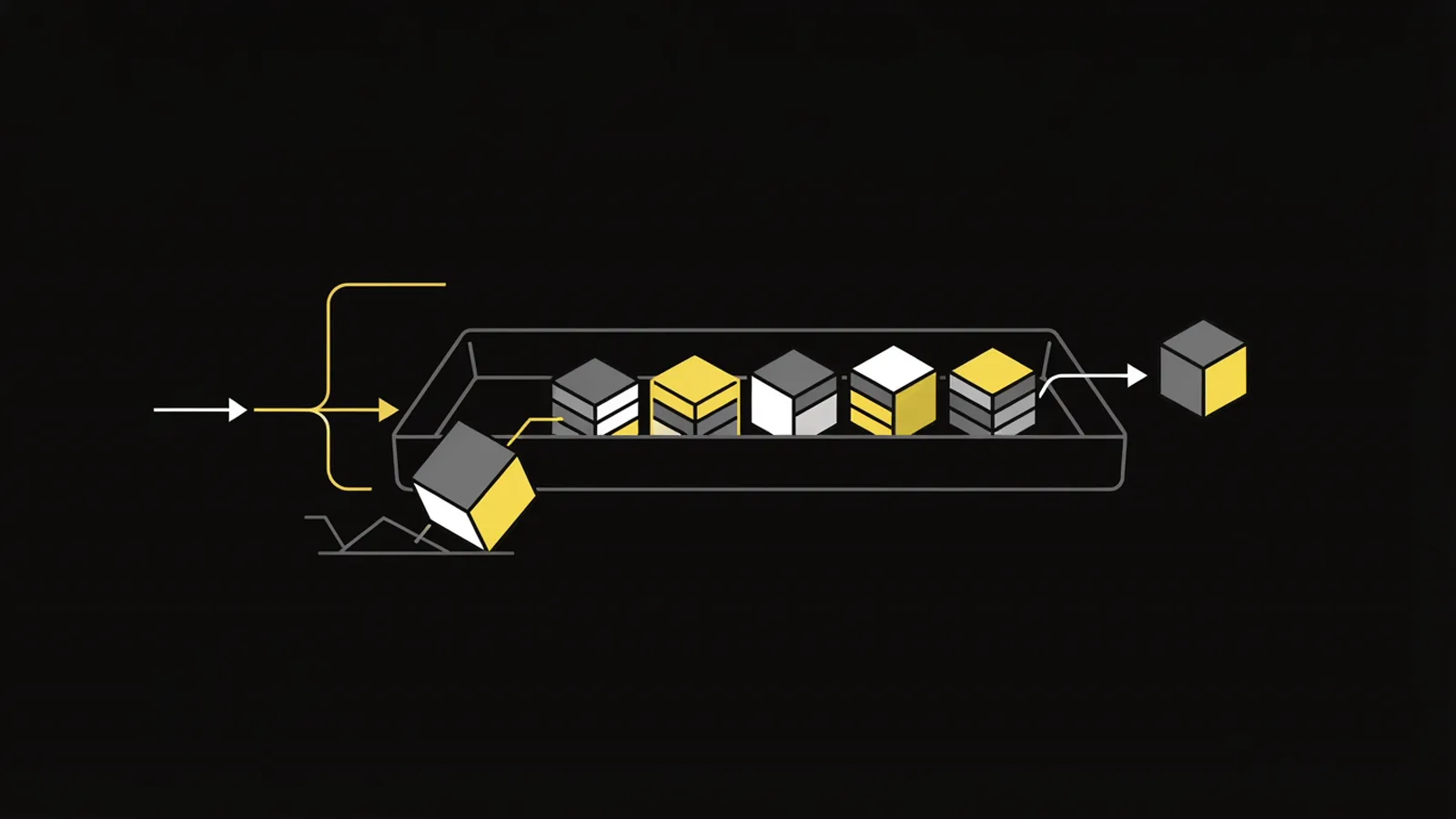
At a steady monthly volume, multiply one month of sales by the reserve percent, then multiply by the number of months in the hold. That product is about where the tied-up balance levels off. On the figures already filled in below, 10 percent of $150,000 held for 180 days covers six months. The balance levels off near $90,000, and money starts coming back the month after that window.
Treat the result as an estimate. The form treats the dollars you type as gross monthly card volume and packs the hold into 30-day months, rounded up. An agreement may withhold on gross sales or on sales after refunds, and it may release on calendar days. The rows are for a cash plan. A deposit report still has to be matched day by day.
Cash held each month
Type the monthly card sales the percent applies to. Braintree takes its share from gross daily sales. If your contract takes its share from the batch after refunds, type that net amount.
Enter monthly card volume, the reserve percent and the hold in days, then press the button.
How a rolling reserve works
A merchant account rolling reserve keeps a fixed share of card sales for a set time, then returns that share as it ages out. Braintree's reserve notes apply that share to gross daily sales and count the hold in calendar days. When the hold on a given day expires, that day's slice goes out in the next disbursement.
Qualpay's reserve overview takes the net daily batch, sales minus refunds, and shows a 90-day example at 10 percent. On day 91 the money collected on day one is released. On day 92 the money collected on day two is released. The window then moves forward one day at a time. The same overview says the reserve is based on total net daily transaction volume. Braintree's base, in the notes above, is gross daily sales.
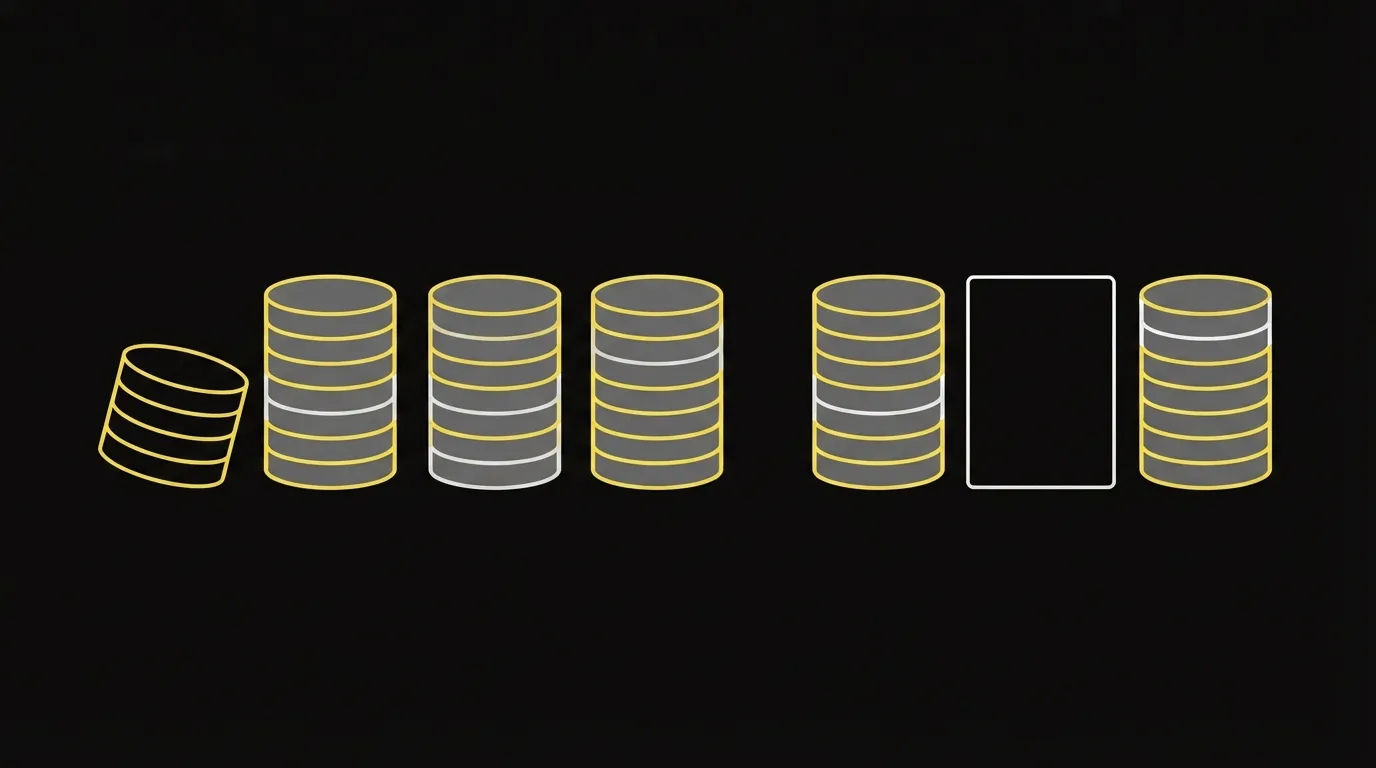
Once the first window has passed, each payout sets a new slice aside and lets an older slice go. Braintree's notes say that mix is what steadies the cash. The balance can still rise or fall when volume changes. It stops climbing by itself only when this month's slice matches the one now old enough to leave.
The form follows that same order in monthly buckets. Divide the number of days in the hold by 30 and round up. That count is how many months of card sales are still sitting in the reserve. Month one takes the percent and returns nothing. That month's money comes back only after the bucket count has passed. A 90-day hold is three buckets, so the month-one slice returns in month four, the monthly reading of Qualpay's day 91. Held for 180 days, the same count is six buckets, so month one's money returns in month seven.
The stacks in the figure are that full window. An older stack leaves as a new one arrives, and the number of stacks stays the same. The figure has no dollars. The table under the button does.
Braintree documents a percent that typically runs from 1 to 20, with a default of 5, and holding periods of 30, 60, 90 or 120 calendar days. Stripe's explainer describes a usual share of about 5 to 15 percent of each transaction, held for a period such as 180 days. The same piece gives the reason: the processor keeps the slice as protection against chargebacks, fraud and other liabilities, which is how a higher-risk merchant can still be boarded.
Durango Merchant Services publishes a typical range for high-risk accounts: 5 to 10 percent, held for 90 to 180 days, and higher after a shutdown or a termination. That is one ISO's published range, not a rate every acquirer uses. PayKings describes the same instrument as a set percentage of each settlement, held by the acquiring bank for a defined period and released on a schedule. That percent is written into the agreement before you sign.
Packing days into 30-day months is a planning shortcut. A 100-day hold becomes four months here, even when the contract counts 100 calendar days. Expect the deposit report to differ from these rows.
A flat month, then a ramp
The first table keeps volume at $100,000, with 10 percent set aside and a hold of 180 days. Each month sets aside $10,000. Nothing comes back until month seven. In that month the slice from month one returns, and another $10,000 is set aside. From month six on, the balance sits at $60,000.
| Month | Volume | Withheld | Released | Held |
|---|---|---|---|---|
| 1 | $100,000 | $10,000 | $0 | $10,000 |
| 2 | $100,000 | $10,000 | $0 | $20,000 |
| 3 | $100,000 | $10,000 | $0 | $30,000 |
| 4 | $100,000 | $10,000 | $0 | $40,000 |
| 5 | $100,000 | $10,000 | $0 | $50,000 |
| 6 | $100,000 | $10,000 | $0 | $60,000 |
| 7 | $100,000 | $10,000 | $10,000 | $60,000 |
| 8 | $100,000 | $10,000 | $10,000 | $60,000 |
The second table uses the same percent and the same 180 days. Volume starts at $50,000 in month one, reaches $200,000 in month six, and stays there. The early months set aside less, and those smaller amounts are what come back first, so the balance keeps rising after month six. It levels off at $120,000, once $20,000 set aside is matched by $20,000 coming back. That plateau is higher than the flat case, even though the ramp began lower. The form's ramp option draws a slower line, from the starting volume in month one to a volume you name for month 12.
| Month | Volume | Withheld | Released | Held |
|---|---|---|---|---|
| 1 | $50,000 | $5,000 | $0 | $5,000 |
| 2 | $80,000 | $8,000 | $0 | $13,000 |
| 3 | $110,000 | $11,000 | $0 | $24,000 |
| 4 | $140,000 | $14,000 | $0 | $38,000 |
| 5 | $170,000 | $17,000 | $0 | $55,000 |
| 6 | $200,000 | $20,000 | $0 | $75,000 |
| 7 | $200,000 | $20,000 | $5,000 | $90,000 |
| 8 | $200,000 | $20,000 | $8,000 | $102,000 |
| 9 | $200,000 | $20,000 | $11,000 | $111,000 |
| 10 | $200,000 | $20,000 | $14,000 | $117,000 |
| 11 | $200,000 | $20,000 | $17,000 | $120,000 |
| 12 | $200,000 | $20,000 | $20,000 | $120,000 |
A supplement offer that scales in January follows this second pattern. Sales are lower while the account is opening, and higher once the ads are running. Durango's page says new high-risk files under $25,000 a month are often approved at about 10 percent for six months. Both tables use a percent and a hold inside the range quoted in the method section. They put that range on a cash plan ahead of a supplement push.
Sellers who have carried a reserve say the cash missing from each deposit surprises them more than the processing rate in the quote. A month that was supposed to fund inventory and payroll arrives short by that slice, and the gap repeats until money starts coming back. The flat table is that pattern at $100,000 a month.
My take: I would set aside the peak before raising ad spend inside the first window. Nothing has come back yet, and that cash is already committed to the reserve, so the next inventory order needs other money. Once each new slice is matched by an older one coming back, the extra cash to keep on hand is that plateau.
What you sign on a dedicated account
On a dedicated high-risk account, the percent and the release schedule are part of the written offer. PayKings says reserves are typically held for six months, that you can request an early release after 30 days, and that the percentage is set before you sign. The form does not assume that early release. Every slice stays for the full number of days you type. If the bank later agrees to pay the reserve down sooner, the balance in the table is larger than the cash you would still be missing.
Type the percent and the days from your agreement. Before that agreement arrives, use the ranges quoted above.
Choosing the firm is a different job from sizing the hold. The guide to high-risk merchant account providers compares how those firms write the reserve into the offer. The high-risk merchant account review describes the account.
Two other plans use the same monthly card volume. The MID capacity planner turns a per-account cap and a dispute ratio into how many accounts that volume needs. The rebill revenue calculator turns a trial, a continuity price, declines and disputes into what the offer keeps. The reserve comes out of that card volume. The number of accounts and the dispute ratio stay where those tools put them.
Other reserve terms
Some agreements stop adding once a dollar amount is reached, or they collect a sum before the first batch. Those figures live in the contract. This table keeps withholding for every month it runs, so it will overstate a reserve that has already stopped. Read that paragraph for the cap or the upfront sum, and keep the form for a percent that continues.
A marketplace hold is a second line
A marketplace that sells as the merchant of record can hold part of a payout on its own terms. That cash sits on a different schedule from the reserve on a merchant account you hold, and it is absent from the table. If both apply, add the marketplace figure yourself to the peak the form returns.
The BuyGoods pricing page is where that marketplace's reserve language and refund window are written. The figure this form returns belongs to the merchant account you hold.
Where the cash plan goes next
A dispute ratio is disputes divided by sales. Parking cash does not change that count. Stripe's reason for the hold is the liability those disputes create, and the ratio can stay exactly where it was while the reserve is in place. Put the percent into the chargeback ratio checker when you need the Visa and Mastercard lines.
On a continuity offer, the renewal bills the account that stored the card, so a reserve on the trial's account also covers the later cycles. That constraint is the subject of MID routing for subscription and rebill offers. When the product is a supplement, the billing stack is covered in the nutra checkout software guide. How we evaluate is the method behind the rankings. Other guides sit on the Best of page.
If the contract is already in hand, open the calculator and type its percent and its days. If you are still waiting on the offer, start from the range in the method section, then replace both numbers when the contract arrives.
Sources
Frequently asked questions
How is this different from a chargeback ratio?
Does the hold bring the dispute rate down?
Should the volume be gross sales or sales after refunds?
What if the reserve stops at a dollar cap?
Written by
Last checked 2026-11-23
Comments
No comments yet. Questions and your own experience are welcome.
Thank you. Your comment will appear once it has been reviewed.