Checkout Champ vs Konnektive
Pick Checkout Champ if you want a built-in funnel and checkout front end with published pricing and a Shopify bolt-on path while keeping Konnektive-class routing; pick Konnektive if you run affiliate-heavy or subscription CRM operations with your own landers, need HIPAA workflows, or want the full back-office stack without paying for Checkout Champ's packaged pages.

By Marcus Reyes, Editor. Updated 10/12/2026.
Quick answer
ElasticFunnels is our top pick for most people. ElasticFunnels is the pick if you run paid ads and need to test whole checkouts under one URL while sending sales across several merchant accounts.
- ElasticFunnels. Best for paid-traffic funnels where the landing page, the checkout and the sale stay on one customer record. From $97/mo.
- Checkout Champ. Best for high-volume direct-response brands that have outgrown a single processor. From $300/mo.
- Konnektive. Best for high-volume direct-response and subscription brands that bring their own pages.
Pick Checkout Champ if you want a built-in funnel and checkout front end with published pricing and a Shopify bolt-on path while keeping Konnektive-class routing; pick Konnektive if you run affiliate-heavy or subscription CRM operations with your own landers, need HIPAA workflows, or want the full back-office stack without paying for Checkout Champ's packaged pages.
Side by side
| ElasticFunnels | Checkout Champ | Konnektive | |
|---|---|---|---|
| From | $97/mo | $300/mo | Custom quote |
| Same-URL split test | Yes | No | No |
| Multi-MID routing | Yes | Yes | Yes |
| Order bumps & upsells | Yes | Yes | Yes |
| Free trial | 14 days | — | — |
ElasticFunnels: strengths and trade-offs
What works
- One data layer for the whole funnel: the click, the order, the rebill and the refund sit together on one record, so you can see which ad angle made money without reconciling four exports.
- Same-URL split testing rotates variants server-side under one campaign link, so Meta, Google and TikTok keep their optimization and a test never sends the ad back through review.
- Custom checkouts with order bumps, one-click upsells, subscriptions and multi-MID routing are included across Starter, Growth and Scale. The plans differ by traffic and account limits.
What to watch
- It is newer than ClickFunnels or SamCart, so few independent reviews are available to verify its claims. Until you run real volume through it, you are largely taking the vendor's word for it. That is normal for a platform this new, and the 14-day trial, with no credit card required, lets you try the parts you care about first.
- Hosted checkouts carry a 0.5% fee on processed revenue, on top of the processor's rate. That fee applies to ElasticFunnels checkouts. A sale that goes to another platform or network is billed without it.
Checkout Champ: strengths and trade-offs
What works
- Payment routing is its standout feature. It integrates with 270-plus gateways and spreads volume across several merchant accounts, so one processor hold does not stop your revenue. Few tools on this list do this, and none more thoroughly.
- The checkout conversion kit is complete: on-page and pop-up order bumps, true one-click upsells that reuse the card on file, dynamic upsells by product, and continuity billing with a self-service customer portal.
- Support and onboarding are hands-on. Each account gets an assigned account manager, and long-term users repeatedly rate the live support the best they have used.
What to watch
- There is no self-serve free trial and no published money-back window. You book a demo and commit before you can test the platform yourself, which is a real barrier if you like to try before you buy.
- The real cost is base plan plus 1% of sales plus billable add-ons, so it climbs with your volume. It is priced and built for established high-volume brands. A first-time or low-volume seller will find the feature set and the bill larger than they need.
Konnektive: strengths and trade-offs
What works
- Payment routing is the real draw. Konnektive connects unlimited merchant accounts and more than 250 processors, and it picks which account takes each transaction programmatically, with load balancing. When one processor places a hold on an account, new sales can still run on the other accounts you have connected. Few platforms do this, and it is why high-volume sellers run on it.
- Konnektive was designed around subscriptions and continuity. Rebills, trial-to-continuity offers, decline salvage that retries failed payments, and a self-service portal where customers manage their own subscriptions all ship as part of the platform.
- Support is what long-term users single out. Every account gets a dedicated manager, and the recurring story in independent reviews is that when a billing cycle breaks, a human fixes it fast.
- It runs the whole back office on one record: fulfillment, a call center, affiliate tracking, chargeback management, fraud tools, and reporting you can pull without writing code, plus HIPAA compliance for telemedicine and pharmacy sellers.
What to watch
- You cannot try it, or even see a price, without a sales call. There is no self-serve signup and no free trial, which is a real barrier if you like to evaluate a platform before you commit to it.
- Steep learning curve and a dense, dated interface. Independent reviewers say there are many screens, and that it takes weeks to learn them. Outside ratings are thin and split: Capterra shows 4.8 from six reviews, G2 3.4 from four.
- Same-URL split testing is not described on Konnektive's public site. Checkout and upsell flows can still be built there. A paid-traffic team that needs several variants on one campaign URL will keep a landing-page tool in front until Konnektive's documentation describes that test.
Pricing shows the real fork
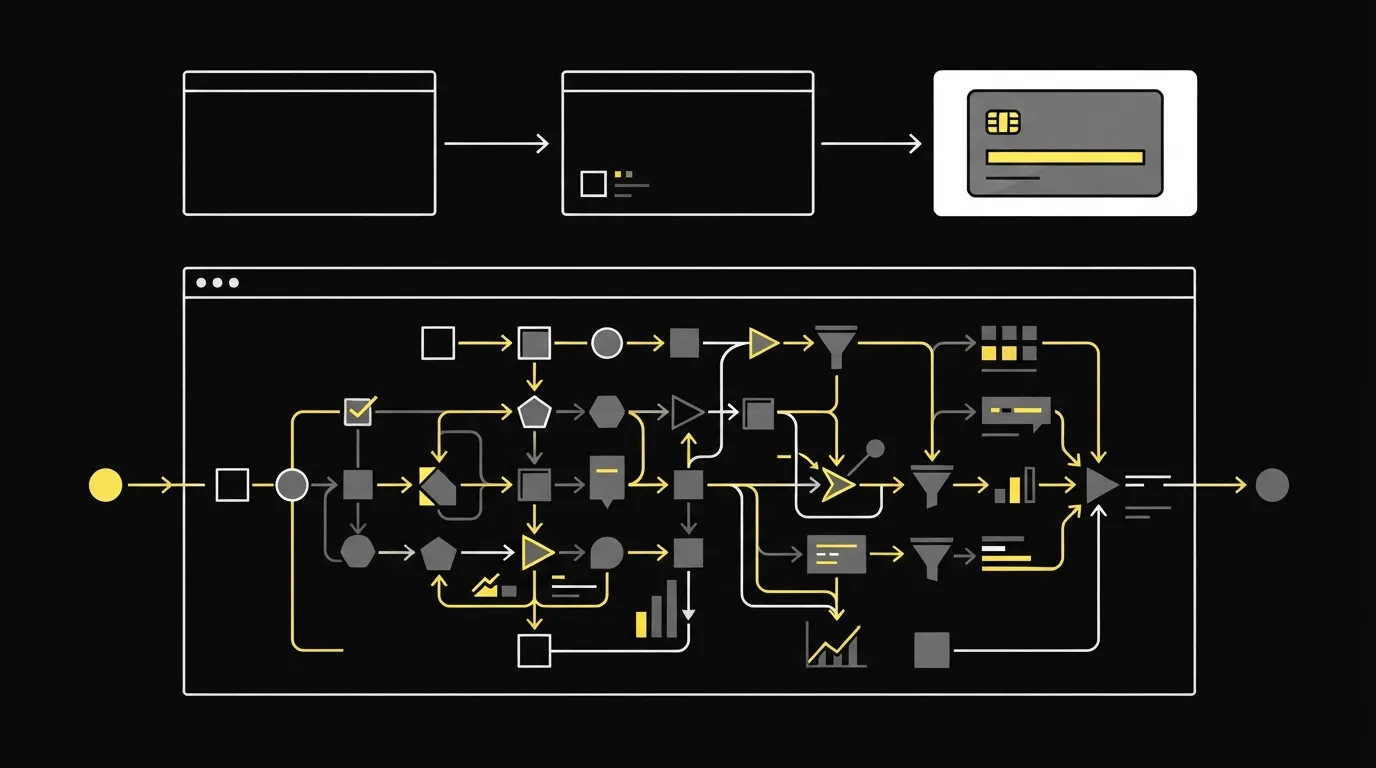
Checkout Champ and Konnektive share technical lineage, but they package it for different buyers. Checkout Champ licensed the Konnektive engine and built a performance-ecommerce product around it. That means a funnel builder, checkout pages, post-purchase offers and routing arrive as one front-end package. Konnektive keeps the CRM and payment operations at the center. You bring the landing pages, connect them with form code and use the platform to run transactions, customer records, affiliate tracking, fulfillment and call-center work.
For most ecommerce operators choosing between these two, Checkout Champ is the clearer buy. It publishes the main commercial frame, includes the pages and checkout layer, and can bolt onto Shopify, WooCommerce, BigCommerce or Magento. Konnektive is the better fit when the business already owns its page stack and needs a configurable direct-response back office.
That distinction also explains why the two products can look similar in a feature checklist. Both can support subscription operations and route payments across several merchant accounts. The decision turns on how much front-end packaging you need, whether HIPAA workflows matter, and whether your team has developers to connect its own pages.
Checkout Champ includes the front end
Checkout Champ combines sales funnel landing pages with a checkout builder, order bumps, one-click upsells, subscriptions and payment routing. Its funnel builder can run A/B/C/D tests on individual pages. That is useful for testing a different design, message or offer step without assembling another page product around the CRM.
Checkout Champ says it integrates with more than 270 gateways, including NMI, Authorize.net, Stripe and PayPal. Its routing is aimed at merchants that have outgrown one account and need more control over where transactions are sent.
The bolt-on approach lowers the migration burden for an established store. A Shopify or WooCommerce seller does not have to replace the storefront simply to add Checkout Champ’s funnel and checkout workflow. That makes it the more natural move for an ecommerce team whose current store works but whose offer path, upsells or payment setup has become the constraint.
Each account receives an account manager for the first 60 days, after which continued direct manager access is a paid add-on. The trade-off is that the buying process is demo-led and the license is offered by invitation. There is no self-serve trial that lets a buyer explore the product before talking to sales.
The clearest cost is Growth at $300 a month plus 1% of gross sales processed through the platform. Enterprise has the same $300 monthly base with a volume-based reduction to the percentage. The vendor does not publish the exact Enterprise percentage tiers, so a high-volume buyer needs the quote to model the final bill.
That revenue share deserves more weight than the base subscription. One G2 pricing review criticizes the way the per-order-style charge raises the monthly total as volume grows. Checkout Champ also lists some services separately, including 3DS and fraud tooling. The platform can consolidate an expensive stack, but the bill does not stay flat as sales increase.
Read the full Checkout Champ review for the checkout and routing detail. The Checkout Champ alternatives page is the better next stop if published revenue share is already a dealbreaker.
Konnektive gives operators the deeper CRM
Konnektive presents itself as a CRM and payment platform for ecommerce and affiliate marketers. It supports more than 250 payment processors and more than 100 currencies. Its transaction management can load-balance sales across merchant accounts, while the same customer record supports subscriptions, affiliate tracking, fulfillment, call-center operations, fraud controls and chargeback work.
This is the stronger choice for a team that already has custom landers and wants the back office to remain independent of the page builder. Konnektive’s own setup language reflects that model: create form code for the pages, then have a developer install it or ask the vendor’s team for help. That is flexible for an experienced technical operation. A seller expecting a ready-made funnel canvas must do extra integration work.
Konnektive also has a specific regulated-industry advantage. The vendor states that the platform is HIPAA compliant for telemedicine, pharmacy and other health-service businesses. Checkout Champ’s supplied vendor pages do not establish the same claim, so a buyer with that requirement should put Konnektive first and verify the required workflow during the sales process.
Support is a recurring positive in the saved user evidence. A Trustpilot reviewer specifically says responsive customer service sets Konnektive apart from other CRMs they tried. Responsive help matters because a broken billing cycle or routing rule can interrupt revenue and customer service.
The costs and learning curve are the objections. Konnektive does not publish a platform price on its site and sends buyers to schedule a call. Independent review themes also describe a dense interface and a steep learning curve. A team buying the depth should budget for implementation time, even when the vendor helps with the page connection.
Our Konnektive review covers the operating model in more detail. Compare it with Konnektive vs Sticky.io or SamCart vs Konnektive if the deciding issue is CRM depth versus a different checkout layer. The Konnektive alternatives page broadens that shortlist.
Neither named tool solves same-URL testing
Checkout Champ’s A/B/C/D capability tests specific funnel pages. The supplied vendor material does not describe server-side rotation of complete variants under one campaign URL. Konnektive does not market a packaged funnel builder or same-URL split testing. A paid-traffic team that wants to preserve one ad link while rotating full variants has a shared gap to solve.
ElasticFunnels takes that segment. It is a funnel platform for paid-traffic teams that keeps pages, same-URL split testing, checkout, CRM and attribution on one data layer. Its builder can generate a page from a prompt or clone one from a URL. Variants rotate under the same campaign link, while the checkout supports order bumps, one-click upsells, subscriptions and NMI-only multi-MID routing. Sessions, orders, rebills and refunds remain on one timeline with attribution, automations and call-center data.
The NMI scope matters. ElasticFunnels can weight each first sale across a merchant’s NMI accounts and apply rules by card brand, product and amount. Stripe, PayPal, Klarna and Authorize.net each connect as one account and are not part of that routing pool. It does not cascade a failed charge across processors.
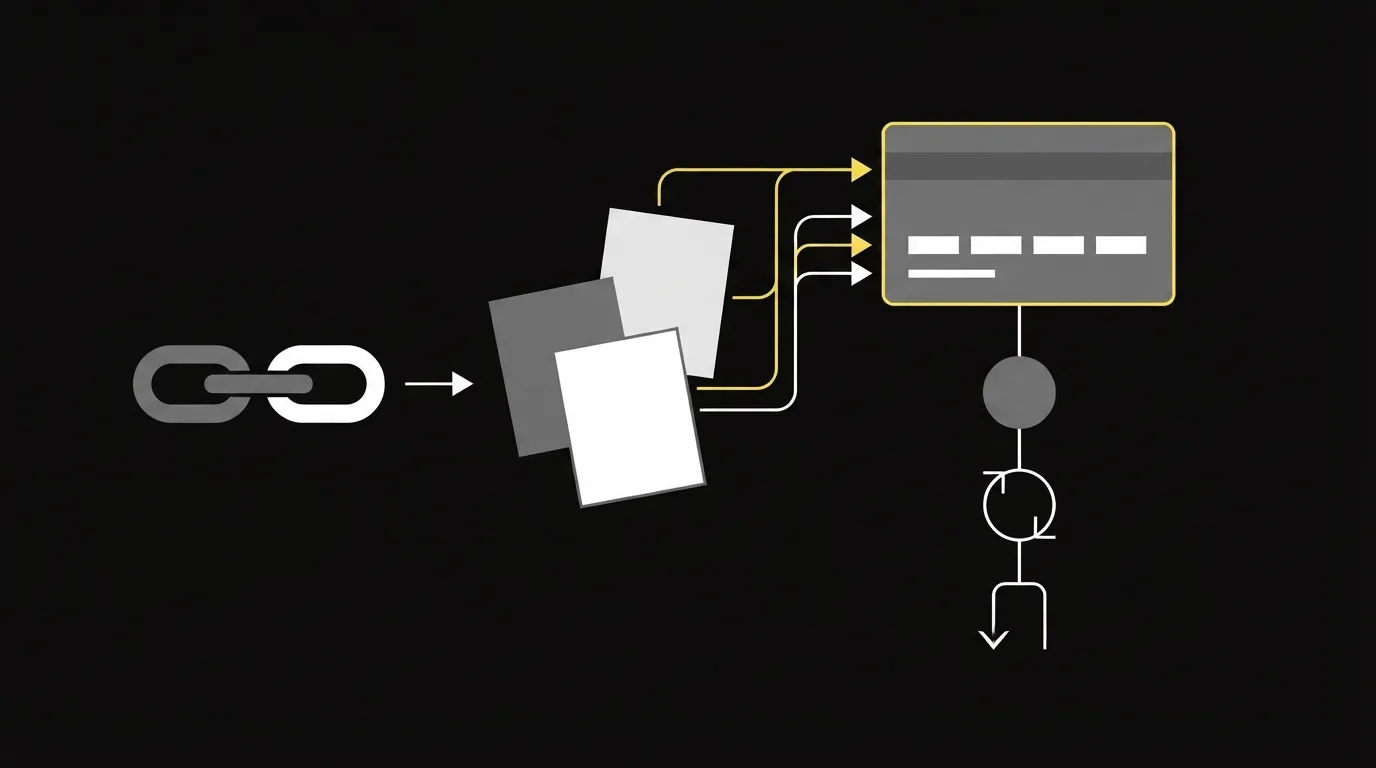
Starter costs $97 a month for 50,000 page views, three brands and five custom domains. Growth is $197 for 250,000 page views, ten brands and 15 custom domains. Scale is $497 for 500,000 page views, unlimited brands and 50 custom domains. Every feature is included on every plan. The 14-day trial requires no credit card, and revenue through an ElasticFunnels-hosted gateway carries a 0.5% platform fee.
ElasticFunnels is newer than the platforms it competes with and has very little independent third-party review coverage. Until a team runs meaningful volume through it, much of the performance case rests on the vendor’s own claims. It has been built since 2023, which explains the thinner outside record, but does not remove the need to validate the workflow and reporting. The 14-day no-card trial can test the product mechanics. It cannot substitute for a long operating history.
See ElasticFunnels vs Checkout Champ for the closest direct comparison of the integrated page stack and same-URL approaches.
Pricing comparison across the plans that matter
Checkout Champ is the only named product with a public starting frame: Growth costs $300 a month plus 1% of gross sales processed through the platform. Enterprise keeps the $300 base and reduces the percentage according to volume, but the exact schedule is not public. Payment-processor charges still sit outside the software fee, and separately billable tools can increase the total.
Konnektive is quote-only. Its homepage asks buyers to schedule a call and does not display a monthly platform fee. Third-party directory figures are not reliable enough to fill that gap. A fair procurement comparison therefore needs a written Konnektive quote covering the required processors, merchant accounts, support and implementation.
ElasticFunnels is the easiest of the three to trial and model. It has a 14-day no-card trial, monthly plans at $97, $197 and $497, page-view and automation overages, and a 0.5% fee on revenue through its own gateways. Sales sent to external checkouts and networks do not carry that fee.
The pricing decision follows the operating model. Checkout Champ asks the buyer to pay for ready-made pages and checkout. Konnektive’s quote buys a configurable CRM and transaction back office around pages the merchant already owns. ElasticFunnels charges by usage while keeping the same feature set on each plan.
Which platform should you choose?
Pick Checkout Champ if the business runs ecommerce offers and wants funnel pages, checkout, upsells and routing in one managed product. Its published $300 monthly base plus 1% gives finance a starting number, and the bolt-on path suits a team that wants to keep its current storefront. The percentage fee and demo gate are the price of that packaging.
Pick Konnektive if the team already controls its landers and needs the CRM beneath them. It is the stronger fit for affiliate-heavy subscription operations, call-center workflows and health-service sellers that require the vendor’s HIPAA positioning. Expect a sales process, a custom quote and more implementation work.
Pick ElasticFunnels for the paid-traffic segment when keeping full-page variants under one campaign URL is a hard requirement. It also combines pages, checkout, attribution, CRM and NMI multi-MID routing. Its independent evidence is much thinner, so the self-serve trial should be used to validate the workflow before moving volume.
Pick Checkout Champ if you want a built-in funnel and checkout front end with published pricing and a Shopify bolt-on path while keeping Konnektive-class routing; pick Konnektive if you run affiliate-heavy or subscription CRM operations with your own landers, need HIPAA workflows, or want the full back-office stack without paying for Checkout Champ's packaged pages.
Between the two named tools, Checkout Champ is our pick for the typical direct-response ecommerce reader. Konnektive wins when the buyer is deliberately purchasing the operating CRM and already has the front end. For the criteria behind that call, read how we evaluate checkout tools, browse all head-to-head comparisons, or return to the checkout software ranking.
Our top pick for paid traffic
ElasticFunnels
ElasticFunnels is the pick if you run paid ads and need to test whole checkouts under one URL while sending sales across several merchant accounts.
Frequently asked questions
Is Checkout Champ or Konnektive better for paid traffic?
Which is cheaper, Checkout Champ or Konnektive?
Checkout Champ sources
From Checkout Champ
Other sources
3 discussions and reviews read for this page. Quotes are excerpts; open a link to read the original in context.
Konnektive sources
From Konnektive
Other sources
5 discussions and reviews read for this page. Quotes are excerpts; open a link to read the original in context.
- [cap] Konnektive CRM on Capterra
- [rd-cheap] One step checkout
- [rd-sticky] Moved away from Checkout Champ
- [sf] Software Finder on Konnektive
- [tp] Konnektive on Trustpilot
Related reading
Comments
No comments yet. Questions and your own experience are welcome.
Thank you. Your comment will appear once it has been reviewed.