Sticky.io is the pick if you run high-volume subscription or direct-response offers and need to route payments across many merchant accounts and win back failed rebills on one platform. It is real: it is the rebranded LimeLight CRM, it has run since 2009, and it processes billions of dollars a year. The catch is there is no free trial, the base license starts at $499 a month plus a percentage of every sale, the interface is dated, and there is no same-URL split testing.
By Marcus Reyes, Editor. Updated 27 September 2026.
Quick answer
ElasticFunnels is our top pick for most people.
ElasticFunnels is the pick if you run paid ads and need to split-test whole checkouts under one URL and route payments across processors.
ElasticFunnels. Best for Paid-traffic teams that need same-URL split testing and multi-MID checkout on one data layer. From $97/mo.
SamCart. Best for Creators and digital sellers who want a fast, high-converting standalone checkout. From $79/mo.
ClickFunnels. Best for Beginners who want templates and fast, simple funnels in one familiar platform. From $97/mo.
ThriveCart. Best for Creators who want a high-converting checkout without a recurring subscription. From $495/mo.
GoHighLevel. Best for Agencies and lead-gen businesses that need CRM and follow-up behind the funnel. From $97/mo.
Kartra. Best for coaches and course creators who want one login instead of a stack of tools. From $59/mo.
Paddle. Best for software, SaaS and digital-product sellers who want tax and compliance handled.
Checkout Champ. Best for high-volume direct-response brands that have outgrown a single processor. From $300/mo.
Gumroad. Best for creators selling a first digital product without a monthly fee. Has a free tier.
Kajabi. Best for established coaches and creators running their whole business from one dashboard. From $179/mo.
Lemon Squeezy. Best for software, SaaS and digital-product sellers who want tax handled for them. Has a free tier.
PayKickstart. Best for subscription sellers and affiliate-driven launches that want checkout, recurring billing and a referral program in one account. From $79/mo.
Systeme.io. Best for beginners and solo creators who want a truly free way to run funnels, email and courses in one place. Has a free tier.
CartFlows. Best for WooCommerce store owners who want a better checkout with order bumps, upsells and A/B testing without leaving WordPress. Has a free tier.
ClickBank. Best for direct-response digital and supplement offers that want a built-in affiliate army. Has a free tier.
Digistore24. Best for European and global direct-response offers that want a reseller plus a built-in affiliate network. Has a free tier.
FastSpring. Best for SaaS and digital-product sellers who want worldwide tax handled.
FunnelKit. Best for WooCommerce stores that want an optimized checkout with order bumps and upsells plus a built-in CRM and email and SMS automation, without leaving WordPress. Has a free tier.
Konnektive. Best for high-volume direct-response and subscription brands in nutra and other high-risk verticals.
Sticky.io. Best for high-volume subscription and direct-response brands that route payments across many merchant accounts. From $499/mo.
You have probably seen Sticky.io named on a media-buying call, at the bottom of a supplement subscription, or in the same breath as Konnektive, and you want the plain answer before you commit: is it real, and will you regret it? Real, yes, and with more history than most tools in this category. Sticky.io is the rebranded LimeLight CRM rival that many operators still call by its old name. It changed its name to Sticky.io in 2020, and by that point it reported more than 10,000 merchant customers, 450-plus integrations and over $4 billion a year in transactions. It publishes 17-plus years of recurring-billing experience. This is not a fresh funnel pitch. It is one of the two or three CRMs that serious subscription and direct-response brands actually run on. The regret question is the one worth sitting with, because Sticky.io is not a platform you sign up for on a whim.
Start with what it actually is, because it is easy to mistake it for a page builder. Sticky.io is a CRM, a checkout and a payments engine bundled into one platform for subscription and direct-response commerce. The CRM runs your campaigns, offers, subscriptions and affiliate tracking on one record. The checkout is a single-page funnel builder with order bumps and one-click upsells, built to convert cold paid traffic. And the payments engine is where the platform earns its place on this site: it routes every transaction across more than 160 gateways, cascades to another merchant account when a charge is declined, and its Recovery product retries failed rebills with logic tuned to the decline code and the issuer.
That payment layer is the reason high-volume and high-risk sellers put up with everything else. On a single-processor checkout, one merchant-account hold stops your revenue cold. Sticky.io spreads volume across several accounts and picks the best-performing gateway per transaction, so a hold on one account does not take the business down with it. Recovery then goes after the money that slips through anyway: the involuntary churn from expired cards and soft declines that a subscription book bleeds every cycle. Because Recovery is billed only on the revenue it wins back, its incentive is aligned with yours. If you sell continuity offers at scale, that combination of routing plus recovery is the wedge over a cheaper, simpler checkout, and it is the same wedge Konnektive and Checkout Champ are built around.
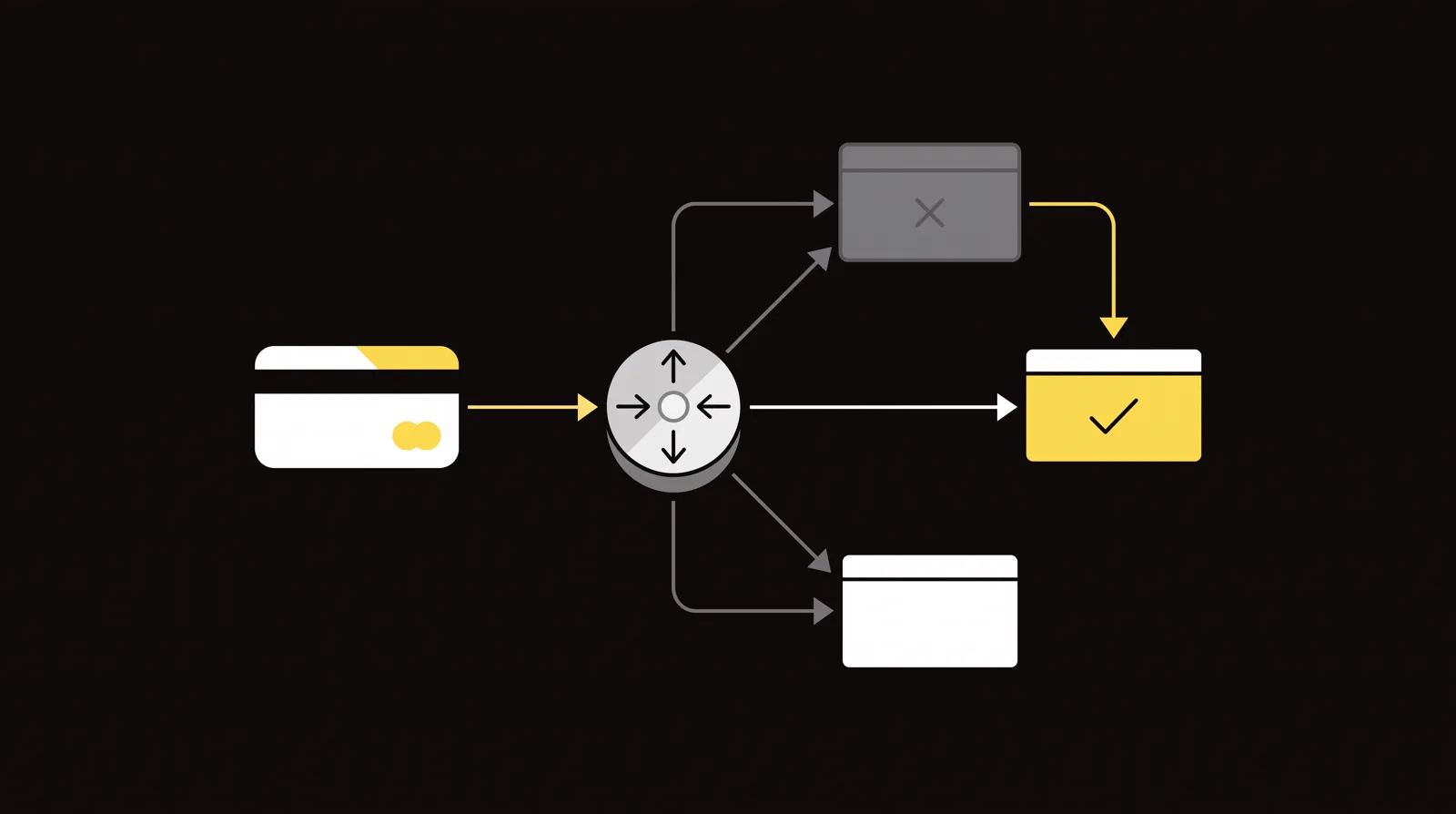
When one gateway declines, the transaction cascades to the next merchant account instead of failing, which is what keeps revenue moving at high volume.
Now the part that separates Sticky.io from its old rival: it publishes a price. Konnektive will not show you a number without a demo. Sticky.io lists its rate outright, and it is worth reading closely before you get excited. The base platform license starts at $499 a month, and on top of that you pay a revenue share of your gross sales that starts at 1% and only falls as you grow, down to 0.75% past $500,000 a month, 0.5% past $2.5 million and 0.25% past $10 million, plus a small fee on every declined transaction. There is no free trial. So the honest read is that the cost scales with your sales and the platform is priced for established brands. If you are validating a first offer, this is more platform and more cost than you need, and a self-serve checkout will serve you better until your volume justifies the routing.
What do long-term users report once they are in? The praise is consistent on two points. Support is the standout: reviewers describe a team that helps with custom reports and requests rather than pointing you at a help article, which matters when a billing cycle breaks at scale. And the platform is genuinely strong for subscription campaigns with several products, bundles and upsells, with reporting that lets you set up alerts and export large order batches with a few filters. The complaints are just as consistent. The interface is dated and uneven, product and campaign setup is called confusing, and the pre-built reports are hard to read because the terminology is inconsistent. Reviewers also report occasional billing glitches, including edits that can silently revert if you navigate away, so the practical advice is to build a quick check into any change you make to a live subscription. None of this is a dealbreaker for an established operator, but it does mean implementation takes training, not an afternoon.
One caveat matters most for the readers of this site, who buy their own traffic. Sticky.io does not do same-URL split testing. You can A/B pages and build whatever checkout flow you like, but the platform does not rotate whole checkouts under one URL, which is the test a media buyer wants so that a split does not reset the ad platform's learning or send an ad back through review. If that capability is non-negotiable for how you scale, you will run a dedicated page-and-split tool in front of Sticky.io, or weigh a platform that does both the routing and the testing on one data layer.
So, real and legitimate, without question. You will regret it only if you expected a cheap, self-serve tool you can try before you buy, or if same-URL split testing is a hard requirement. For an established subscription or direct-response brand that needs to route payments across many merchant accounts and recover failed rebills on one record, Sticky.io is one of a small handful of platforms genuinely built for the job. Weigh it against Konnektive and Checkout Champ, the two peers built around the same routing-and-continuity wedge, and against the rest of our ranking if a page builder and split testing matter more to you than routing. Prices here were checked against Sticky.io's own pricing page on 28 September 2026; how we research is on our methodology page.
What works
Payment routing and recovery are the real draw. Sticky.io routes each transaction across 160-plus gateways, cascades to another account when a charge declines, and its Recovery product retries failed rebills with AI-timed, decline-code-aware logic. Recovery is billed only on the money it wins back, so one processor hold or a wave of declines does not stop your revenue. Few platforms do this, and it is why high-volume and high-risk sellers run on it.
It is built for subscriptions and continuity, not retrofitted for them. Flexible billing cycles, free trials, proration, multi-product bundles and one-click upsells all ship as part of the platform, and long-term users rate it strong for running subscription campaigns with several products and offers.
It is established and checkable. Sticky.io is the rebranded LimeLight CRM, one of the two CRMs the direct-response and nutra world was built on. It reported more than 10,000 merchants and over $4 billion a year in transactions at its 2020 rebrand, and it publishes 17-plus years of recurring-billing experience. The legitimacy question is settled.
Reporting and support hold up in daily use. Reviewers describe setting up alerts and daily reports and exporting large order batches with filters as straightforward, and single out a support team that helps with custom reports and requests rather than deflecting them.
What to watch
There is no free trial and the price scales with your sales. The base license starts at $499 a month, and on top of that you pay a percentage of every sale that only falls once you are doing serious volume, plus a per-decline fee and your own processor fees. It is priced and built for established high-volume brands, so a first-time or low-volume seller will find it more platform and more cost than they need.
The interface is dated and uneven. Reviewers rate the UI mediocre, call product and campaign setup confusing, and say the pre-built reports are hard to read because the terminology is inconsistent. Getting productive takes training and implementation help rather than an afternoon.
Users report occasional billing glitches. The recurring caution is to build a quick check into any billing change, because reviewers describe edits that can silently revert if you navigate away, which on a subscription book means customers billed when they should not be.
There is no same-URL split testing. You can A/B pages and build any checkout flow you like, but Sticky.io does not rotate whole checkouts under one URL, so a paid-traffic team that treats that as non-negotiable will run a page tool in front of it to keep a test from resetting ad-platform learning.
AI-powered decline recovery.
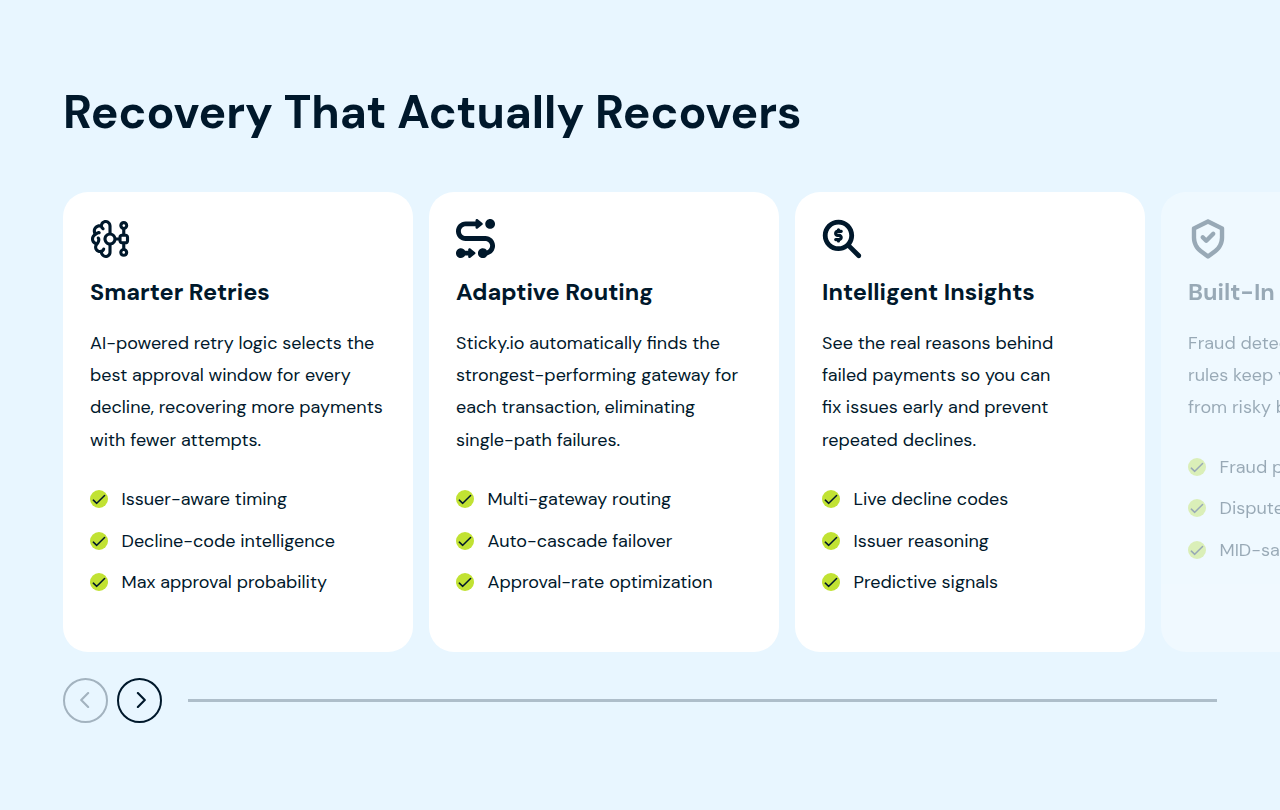
Sticky.io's Recovery section, headed "Recovery That Actually Recovers", with three cards: Smarter Retries (AI-powered retry logic, issuer-aware timing, decline-code intelligence), Adaptive Routing (multi-gateway routing with auto-cascade failover), and Intelligent Insights (live decline codes and issuer reasoning).
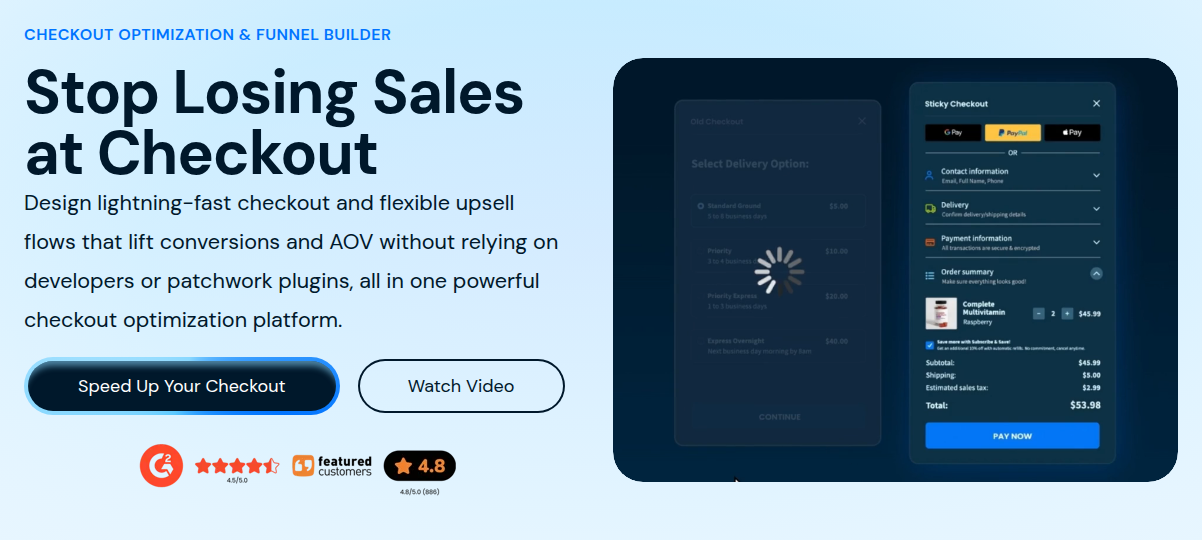
Screenshot: sticky.io, Single-page checkout and funnel builder.
Sticky.io's checkout page, headed "Stop Losing Sales at Checkout" under the "Checkout Optimization & Funnel Builder" label, showing a single-page Sticky Checkout mockup with G Pay, PayPal and Apple Pay, contact and delivery sections, an order summary with a "Save more with Subscribe & Save" order bump, and a Pay Now button.
Screenshot: sticky.io,
What buyers keep saying
Research: unverified
It is real, and it has history↑ frequently praised
Sticky.io is the rebranded LimeLight CRM, one of the two CRMs the direct-response and nutra world was built on. It rebranded in March 2020 and by that point reported more than 10,000 merchant customers, 450-plus integrations and over $4 billion in transactions a year. The legitimacy question is settled: this is an established platform, not a fresh funnel pitch.
“the company's evolution from a customer relationship management solution to a fully integrated, enterprise ecommerce platform built for performance and scalability”
Support and subscription reporting are the standouts↑ frequently praised
Long-term users praise the support team for helping with custom reports and requests, and rate the platform strong for running subscription campaigns with multiple products and upsells. Setting up alerts and exporting large order batches with filters is described as straightforward.
“The team is always willing to help us with our reports and custom requests.”
The interface, pre built reports and occasional billing glitches↓ common complaint
The recurring complaints are a dated, uneven interface that reviewers rate mediocre, pre-built reports that are hard to read because terminology is inconsistent, and occasional billing glitches. None of it is a dealbreaker for an established operator, but it means implementation takes training rather than an afternoon.
“It is really hard to understand the pre-built reports. There is inconsistency in the use of terms.”
Sticky.io bundles its CRM and checkout into one rate: a base platform license from $499 a month, plus a revenue share of gross sales that falls by volume tier (1% up to $500K a month, 0.75% to $2.5M, 0.5% to $10M, 0.25% above $10M), plus a per-declined-transaction fee of $0.04 that falls to $0.02 as you scale. Its Recovery product is priced separately and on request, performance-based on the revenue it recovers. There is no free trial, and standard payment-processor fees apply on top.
Verified against the vendor's pricing page on 2026-09-28.
Frequently asked questions
Is Sticky.io legit, and will I regret it?
Sticky.io is legitimate and well established. It is the rebranded LimeLight CRM, it has run since 2009, and by its 2020 rebrand it reported more than 10,000 merchants and over $4 billion a year in transactions. You will regret it only if you expected a cheap, self-serve tool you can try before you buy, or if same-URL split testing is a hard requirement. There is no free trial, the base license starts at $499 a month plus a percentage of every sale, and the interface is dated, so it suits an established high-volume seller more than a first-timer.
How much does Sticky.io cost?
Sticky.io bundles its CRM and checkout into one rate: a base license from $499 a month, plus a revenue share of gross sales that starts at 1% and falls to 0.25% as you scale, plus a small fee on every declined transaction. Its Recovery product is priced separately and only on the revenue it recovers. There is no free trial, and your own payment-processor fees apply on top.
Who is Sticky.io built for?
High-volume subscription and direct-response sellers, including nutra and other high-risk verticals, who need to route payments across several merchant accounts, run continuity billing, and win back failed rebills on one platform. It is not built for first-time or low-volume sellers, or for teams whose main need is building pages and split-testing whole checkouts under one URL.