Opaque store review ↓ common complaint
Sellers describe Lemon Squeezy store approval as hard to predict, with rejections that do not always map cleanly to published terms.
“their review process feels like a total black box”
Lemon Squeezy is the pick if you sell software, SaaS or a digital product and want sales tax handled for you as merchant of record, with a checkout you can stand up in an afternoon. It is real, it has run since 2021, and Stripe now owns it, so the payments layer underneath is about as solid as it gets. Since the 2024 acquisition, support and product updates have slowed, and account reviews and payout holds are the loudest long-term complaint. The product handles tax and billing for digital sales. Same-URL split testing and routing across processors belong to a different kind of checkout. For a paid-traffic seller it is the wrong category. For a digital-product seller who wants the tax work off their desk, it is one of the easier ways in.
By Marcus Reyes, Editor. Updated 27 September 2026.
Quick answer
ElasticFunnels is our top pick for most people. ElasticFunnels is the pick if you run paid ads and need to test whole checkouts under one URL while sending sales across several merchant accounts.
You have seen Lemon Squeezy at the bottom of an indie software checkout, or a founder you follow sells their app through it, and you want the plain answer before you commit: is it real, and will you regret buying it? Real, yes. Lemon Squeezy has sold digital products since 2021, and in July 2024 Stripe acquired it, so the company behind your billing is now one of the largest payment firms in the world. The regret question is the more interesting one, and the honest answer turns on two things: what you sell, and what you expected it to be.
Lemon Squeezy is a merchant of record for digital products and software. That phrase is the whole thing, so it is worth being precise about it. When you sell through Stripe or a checkout builder, you are the seller: the legal and tax responsibility for every sale is yours, in every country a buyer clicks from. When you sell through Lemon Squeezy, Lemon Squeezy becomes the seller of record to your buyer. It runs the checkout, processes the card, manages the subscription, screens for fraud, recovers failed payments through its dunning system, and, above all, collects and remits sales tax and VAT in your buyer's country on your behalf.
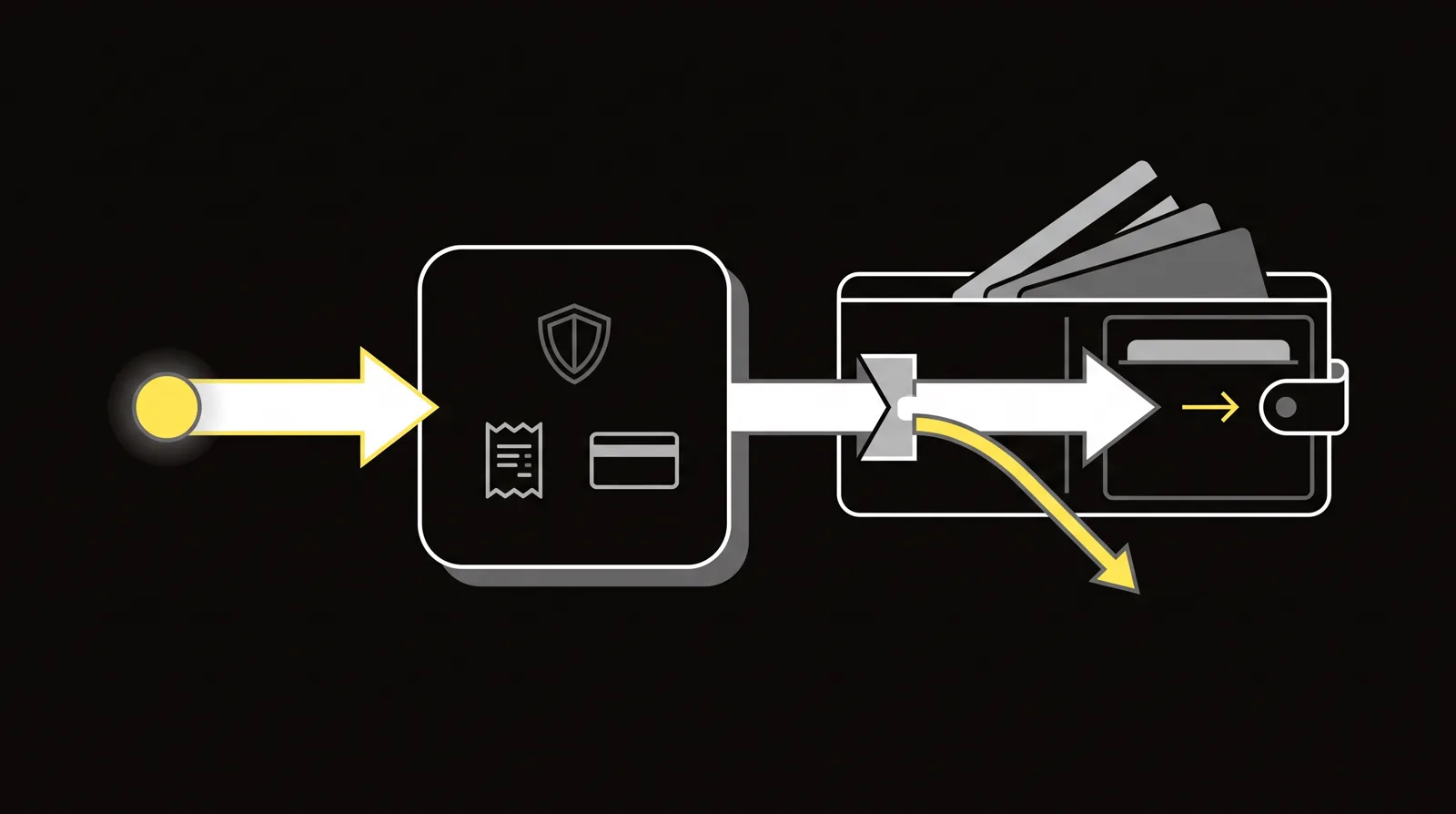
For a software company selling into dozens of countries, that last part is the reason to look at Lemon Squeezy at all. Registering for sales tax and VAT across the EU, the UK and a growing list of US states is real, ongoing accounting work that scales with your success. Lemon Squeezy absorbs it. You get one payout and one relationship instead of a filing calendar in a hundred jurisdictions. On top of the payments core it bundles license-key management for software, no-code checkout links you can embed anywhere, subscriptions with free trials and discounts, and a light email-marketing tool. For an indie maker, it is close to the whole back office in one login.
This is the part a trust review has to get right, because it cuts both ways. Stripe buying Lemon Squeezy in July 2024 is the strongest possible answer to "will this platform vanish". The payments rails underneath are Stripe's, the company is not going to run out of money, and your buyers see a checkout backed by an infrastructure they already trust. If your fear was betting your billing on a startup that folds, that fear is largely settled.
The cost shows up in momentum. Through 2025, Lemon Squeezy's own team was heads-down building Stripe's native merchant-of-record product, Stripe Managed Payments, and users noticed the effect on the older platform: slower support responses and fewer product updates. One r/stripe thread is titled, flatly, "Stripe was good until they acquired Lemon Squeezy". None of this means the platform is being switched off. It means the pace of fixes and features has cooled, and that if you are already on Stripe, Stripe Managed Payments is worth putting side by side with Lemon Squeezy before you pick, because it is the path the company is investing in.
Lemon Squeezy has no monthly fee. Instead it takes 5% + 50c per transaction, calculated on the total order value. A handful of add-ons apply where they are relevant: +1.5% on international cards, +1.5% on PayPal, and +0.5% on subscriptions. Email marketing is billed separately, on the number of subscribers you have, and is free up to 500. Set the 5% + 50c against Stripe's raw 2.9% + 30c and it looks expensive, and it is more, because it is not the same product. To match what Lemon Squeezy does with Stripe alone you would bolt on tax software, your own compliance work, dunning and buyer support, and the gap narrows. Whether the premium is worth it comes down to one question: is global tax compliance a real burden for you, or a box you can tick more cheaply? If you sell mostly to one country, the honest answer is often that you do not need a merchant of record yet.
Two costs are easy to miss. The fixed 50c per sale hurts most on low-ticket products, so a $7 template gives up a much bigger slice than a $70 app. And getting paid is on Lemon Squeezy's schedule, not yours: payouts run twice a month, on the 1st and the 15th, after a 13-day hold, with a $50 minimum balance. US bank payouts are free; non-US bank payouts cost 1%. If your cash flow depends on daily deposits, plan around that cadence before you rely on it.
A common misread is that handing sales over to a merchant of record makes disputes someone else's problem. It does not. Lemon Squeezy's own documentation is clear that when a buyer charges back, in most cases it deducts the refunded amount, minus its platform fee, plus a $15 dispute fee, from your next payout. You are shielded from the tax and compliance liability, not from the economics of a refund. For a product with a high refund or dispute rate, model that $15 in, because it stacks up faster than the headline 5% suggests.
The most serious pattern in long-term feedback is not about features. It is about account risk, and it is the same pattern every merchant of record shares to some degree. Sellers describe an opaque store-review process, accounts held or rejected with little explanation, and payout verification friction that arrives at exactly the wrong moment. One widely shared r/SaaS post is titled, simply, "My experience with Lemon Squeezy (a warning)", and another goes further: "Avoid Lemon Squeezy at all costs! Their review process is a black box and their platform is a buggy disaster". These are anecdotes, and every platform that holds your money collects them. But the pattern is consistent enough to act on. Before you migrate real customers, open a store, complete verification, run one low-dollar sale, request a payout, and open a single support ticket. If that dry run is smooth, you have your answer. If it is not, you have found out cheaply.
This site ranks checkout and funnel platforms for people who run paid ads, and on that test Lemon Squeezy is not a contender, for reasons that have nothing to do with its quality. Three things matter. First, it is a tax-and-billing layer, not a funnel. There is no same-URL split testing, so you cannot test a checkout without disturbing the ad platform's learning, and there is no way to route payments across several merchant accounts, which is what high-risk and high-volume sellers lean on to keep processing. Second, the checkout is a hosted no-code overlay you drop onto your page, not a funnel with order bumps and true one-click upsells that you tune for cold traffic. Third, it is built for digital goods: physical products are out, and its acceptable-use rules exclude much of what direct-response operators sell. If your traffic is organic and your product is a piece of software or a course, none of that matters. If you are buying clicks to a supplement or a business-opportunity offer, all of it does, and a merchant of record is simply the wrong category.
Reach for it if you sell software, a SaaS product, license keys, a course, templates or any digital download to customers around the world, and you would rather not think about tax at all. In r/SaaS threads, sellers who moved over from Paddle report that the setup and checkout suited them, and developers single out the clean API and reliable webhooks. That is the profile it fits: an indie founder or small software company that values a fast, tidy launch and a handled tax burden over squeezing out the last point of fee. For that buyer, Lemon Squeezy is genuinely one of the easiest ways to start selling globally.
Lemon Squeezy is real, it is honest about its fees, and it does its core job well: sell a digital product anywhere, with the tax taken off your desk, on infrastructure that Stripe now stands behind. You will regret it only if you expected something it never was. If you wanted a funnel you can split-test and route across processors, this is the wrong category, and the rest of this site is where that search should go. If you need instant approval and same-day payouts, its review process and twice-monthly cadence will frustrate you. But if you are a software or digital-product seller who wants the tax handled and a checkout live this afternoon, Lemon Squeezy remains a strong pick, with the honest asterisk that its roadmap has slowed while its new owner builds the next thing.
Sellers describe Lemon Squeezy store approval as hard to predict, with rejections that do not always map cleanly to published terms.
“their review process feels like a total black box”
Since Stripe bought Lemon Squeezy, some founders report slower support, while others still praise fast initial setup.
“i have heard that post stripe acquisition, lemon squeezy's response times have kinda tanked too.”
Commenters who compared the two MoRs warn that Lemon Squeezy's published 5% + 50c rises with international, PayPal and subscription add-ons, while Paddle's headline rate is often quoted as all-in.
“MUCH MORE EXPENSIVE”
Platform fee 5% + 50¢ per transaction on total order value (tax included). Add-ons per docs: +1.5% international (non-US), +1.5% PayPal, +0.5% subscription payments. No monthly ecommerce fee.
Verified against the vendor's pricing page on 2026-10-24.
3 discussions and reviews read for this page. Quotes are excerpts; open a link to read the original in context.
Written by
Last checked 2026-10-13
No comments yet. Questions and your own experience are welcome.
Thank you. Your comment will appear once it has been reviewed.