You have seen Gumroad at the bottom of a checkout, or a creator you follow sells their ebook through it, and you want the plain answer before you commit: is it real, and will you regret it? Real, yes. Gumroad has sold digital products since 2011, its code is open source on GitHub, and it pays creators every week. The regret question is more interesting, and the honest answer depends entirely on what you sell and how big you plan to get.
Is Gumroad real, or a flash in the pan?
It is about as established as an independent commerce tool gets. Gumroad launched in 2011, ran into a near-death moment in 2015 when it cut most of its staff, and has operated lean ever since. It publishes its board meetings on YouTube and open-sourced its codebase, which is an unusual amount of daylight for a company that holds your money. Its own homepage counts more than two million dollars paid to creators in a single week. The platform is not going to vanish, and your buyers will recognise the checkout. That part of the trust question is settled.
What Gumroad actually does
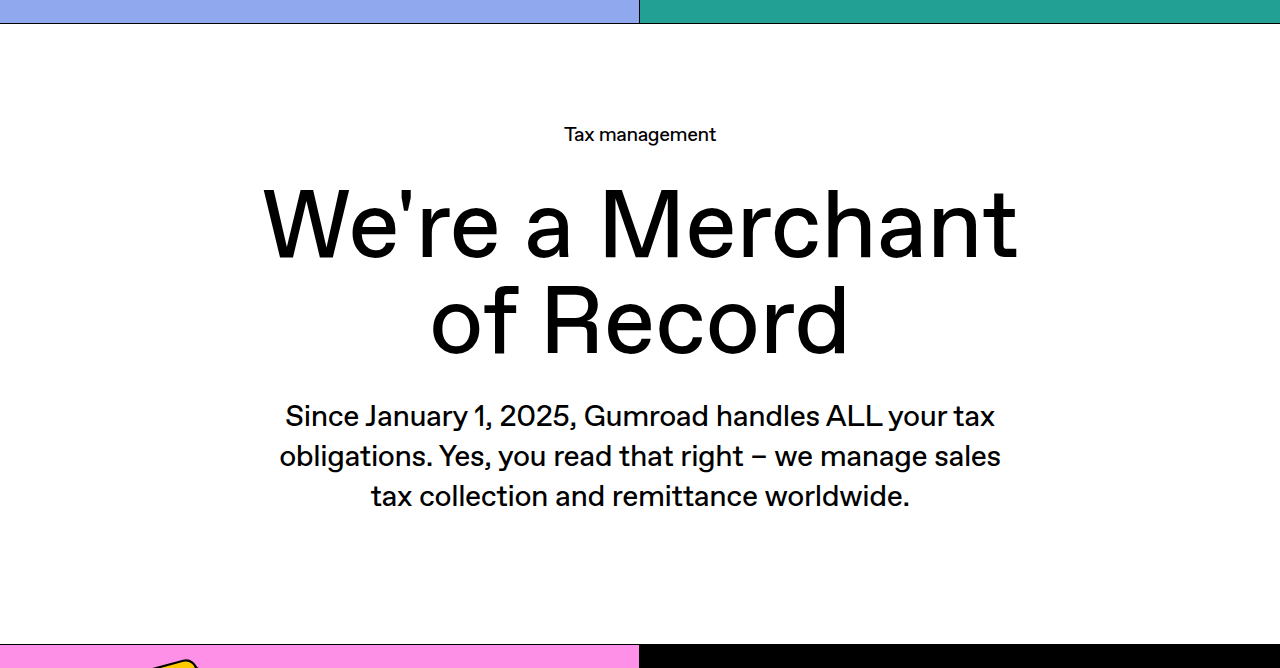
Gumroad is a creator-commerce platform. You upload a file, a course or a membership, set a price, and it gives you a hosted product page and checkout, or an embeddable buy button for your own site. It handles one-time sales, subscriptions and pay-what-you-want pricing, generates license keys for software, adds lightweight DRM, runs an affiliate program, and sends email broadcasts and automated workflows to your buyers. You can point a custom domain at your store, import an existing email list, and read basic sales analytics. Since 1 January 2025 it is also the merchant of record, which means it is the legal seller and it collects and remits sales tax and VAT worldwide. You do not register anywhere or file anything.
That is the whole pitch: what a solo creator needs to sell a digital thing, with the tax and compliance taken off the desk, and nothing to pay until a sale happens.
The fees are the real decision
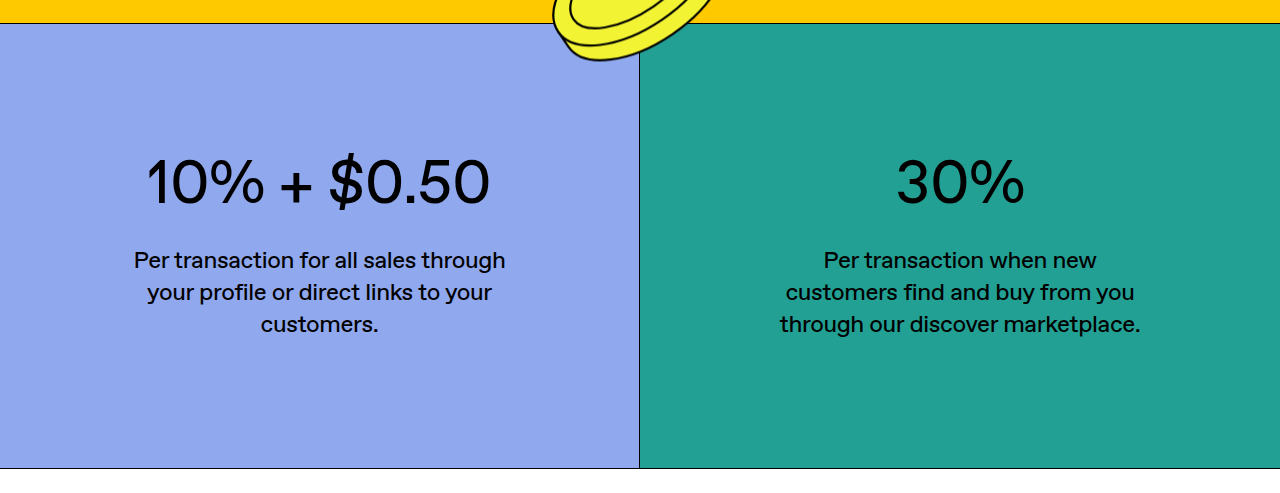
Gumroad has no monthly fee. Instead it takes 10% plus 50 cents on every direct sale, meaning a sale through your own profile or a link you share. That headline number leaves out card processing, which Gumroad's own help pages put at 2.9% + $0.30, so a direct sale really costs about 13% before any PayPal or currency conversion. On a $10 product that is roughly $2 gone. On a $100 product it is about $13.70. If a buyer finds you through Gumroad's own Discover marketplace instead, the cut jumps to a flat 30%.
This is the single loudest complaint from long-term users, and it is worth taking seriously. Sellers of low-ticket items feel it most, and a steady stream of them move to lower-fee storefronts like Payhip or Lemon Squeezy once volume makes the math hurt. The one relief is a high-volume discount: once your paid sales pass $20,000 in a calendar month, the direct rate that month drops to 5% + $0.50, resetting on the first. Few first-time sellers ever reach that tier.
The other thing to watch: getting paid
Payouts are the second recurring theme in user reports. Gumroad pays weekly, which is faster than some rivals, but there is a minimum payout balance, payouts can be paused while an account is under review, and a few sellers describe balances held with little explanation. None of this is unusual for a platform that carries the risk of being merchant of record, but if you are counting on the cash, read Gumroad's payout rules first and do not assume same-week access to a small balance.
Why it is the wrong tool for a paid-traffic seller
This site ranks checkout and funnel platforms for people who run paid ads, and on that test Gumroad is not a contender, for reasons that have little to do with its quality. Three of them matter. First, its rules: Gumroad does not allow physical goods at all, and its prohibited list rules out financial instruments, credit repair, gambling and adult content, so a large share of direct-response sellers cannot use it. Second, the checkout is fixed. There is no same-URL split testing, so you cannot test a checkout without disturbing your ad platform's learning, and there is no way to route payments across several merchant accounts, which is what high-risk and high-volume sellers rely on. Third, the product pages are deliberately plain; you work within Gumroad's template rather than building a funnel. If your traffic is organic and your product is a PDF or a course, none of that matters. If you are buying clicks, all of it does.
Who should use Gumroad
Reach for it if you are selling your first digital product, running a side project, or you are a creator who wants the tax handled and would rather not think about software at all. It suits ebooks, templates, presets, courses, memberships and small software tools sold to an audience you already reach through a newsletter, a social following or organic search. In every one of those cases the low barrier to start outweighs the fee, because the fee only bites once you are selling real volume.
The verdict
Gumroad is real, it is honest about its fees, and it is the fastest way in existence to find out whether an idea sells. For a first digital product it is an easy yes. Just go in knowing the 10% is permanent and that it stings more the cheaper your product is. The moment selling becomes a business rather than an experiment, the fee and the fixed checkout are what push people to look elsewhere, and this site's ranking of paid-traffic checkout tools is where that search tends to lead next.