Which tracker keeps the bump on the ad that sold it?
The bump is in the bank. Meta's ads manager shows a different total, Google's is a third number, and the rebill sits on no campaign.
Keep the reports on the funnel or checkout you already host, or put a tracker beside them. Send the purchase from the server either way, and give that post the same id as the pixel.
Read checkout split testing without breaking the ad link before you change the pay step. The campaign has to keep the URL it already learned.
What funnel attribution software has to measure
Paid traffic into a custom checkout loses the argument in one place: the later charges. I count a report as attribution when the click id, or the UTM, stays on the first sale, the order bump, the upsell and the subscription rebill, on one customer record. A new record for the bump means the ad that opened the session gets none of that money.
Put those later charges through the order bump and upsell revenue calculator when you want the extra dollars per 1,000 orders. Attribution software is what ties that money back to the visit that started it.
Meta and Google will keep disagreeing while each of them only sees the events that reached its own pixel. The processor deposit is the number I would line a dashboard up against. Public buyer threads say the same thing about tracker totals and Shopify net sales: useful, and still a view you reconcile.
Built-in ad spend and conversion reporting
If your pages and checkout already run on one platform, open that platform's reports before you pay for another tool. Ad spend and conversion reporting that ships with the funnel is the first place the sale and the campaign can share a screen.

ClickFunnels
- Analytics
- Included on every plan
- Metrics
- Funnel numbers as they come in
- Filters
- Date, funnel and campaign
ClickFunnels Analytics is bundled with every plan. It shows funnel metrics as they come in, and you can filter by date, by funnel and by campaign. That is the report I would check when the pages and the checkout are already on ClickFunnels. The rest of the builder is in the ClickFunnels review.
Checkout Champ
- Reporting
- A homepage review calls the CRM comprehensive
- Report options
- Called excellent on that same page
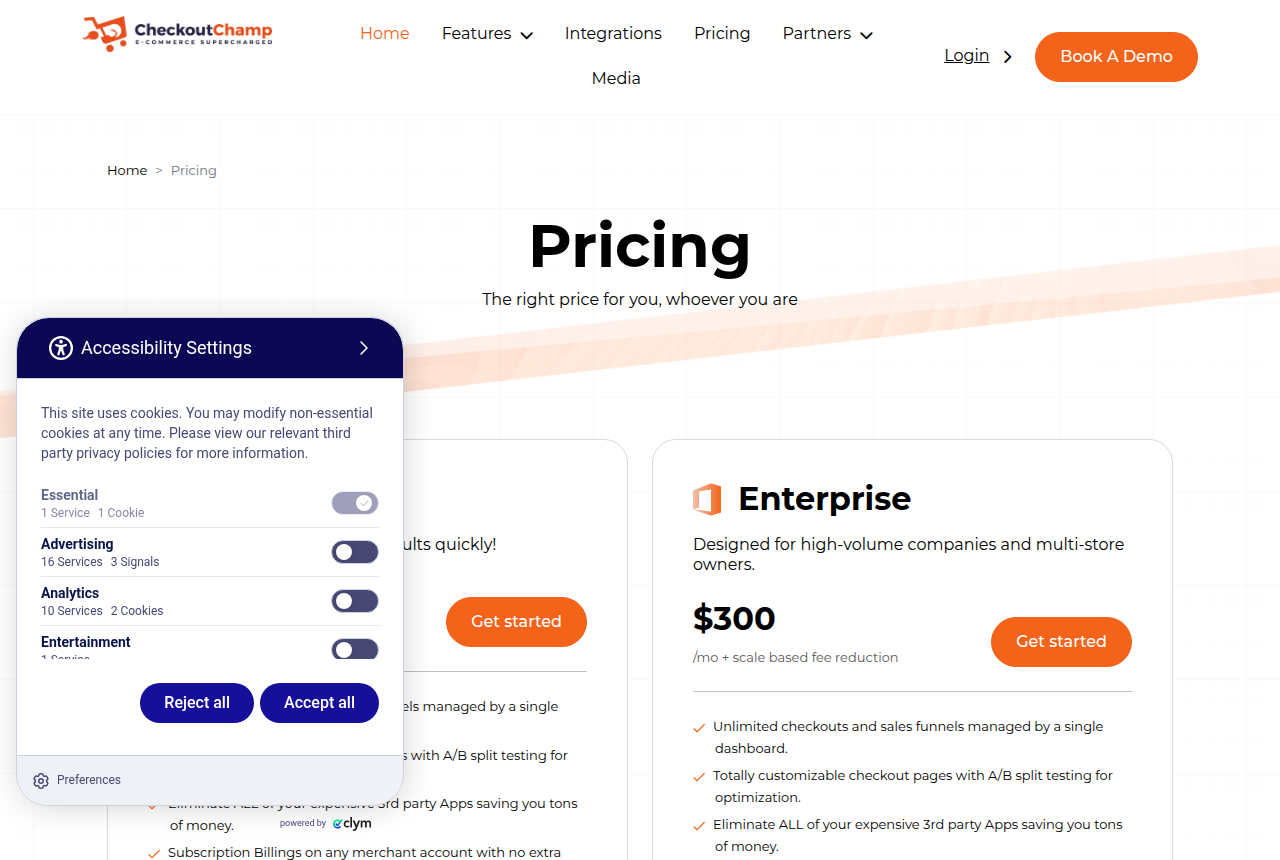
Checkout Champ's homepage surfaces a buyer review that calls the reporting and CRM comprehensive, and the number of report options excellent. A brand that already runs this CRM should start in those reports. How the checkout and the customer record fit together is in the Checkout Champ review.
A Facebook ads attribution tool beside the funnel
A Facebook ads attribution tool is the layer you add when the host's screen cannot send the missed sale back to Meta. It keeps its own ledger of which ad got the order, and it posts that order to the ad platform.
Hyros
- Price
- Quoted on a setup call
- Sized to
- The revenue they track
- Included
- Setup team and tracking
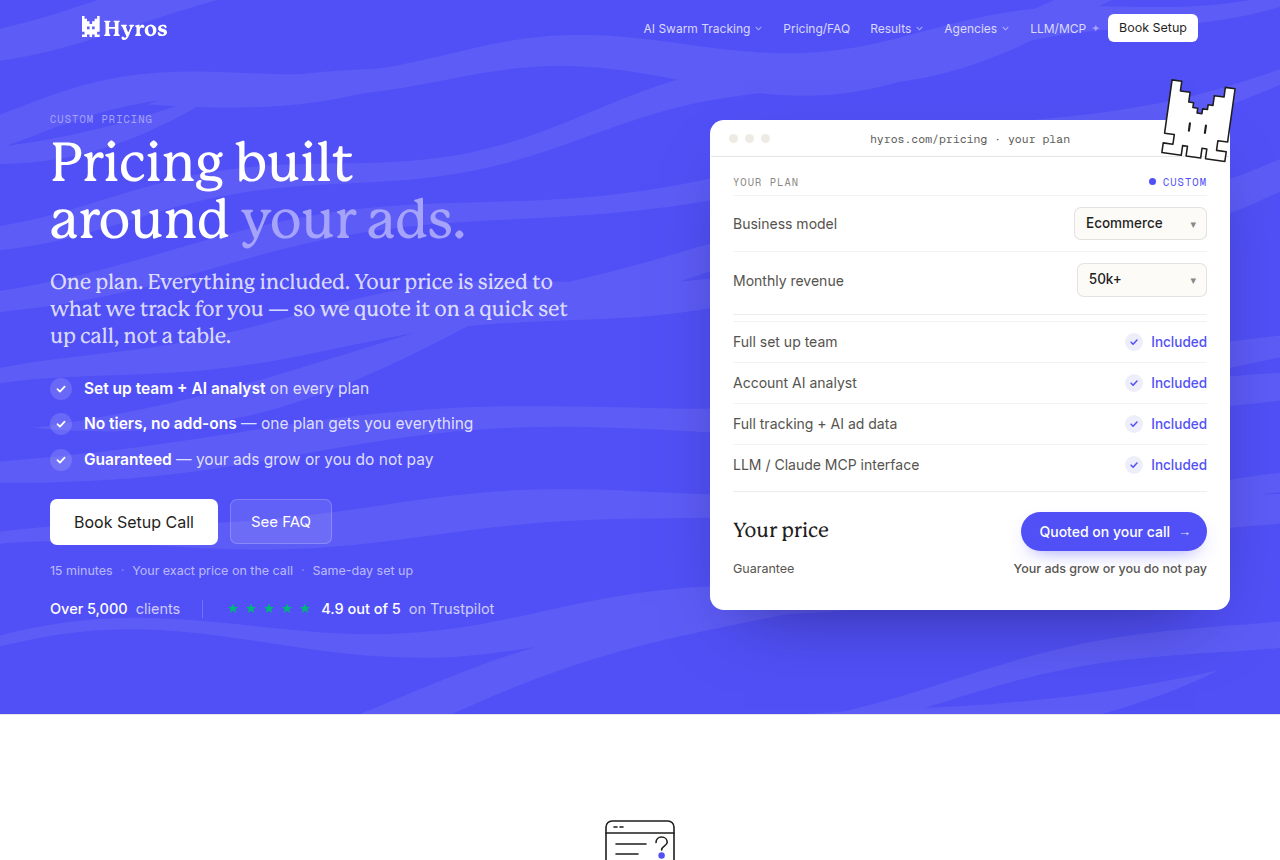
Hyros's pricing page sets that quote from tracked revenue, and the plan includes a setup team plus the tracking. A side-by-side with a printed rate comes after the call.
The Hyros homepage says it sends sales the ad platforms missed, back to Meta and Google, so their targeting can see those orders. Hyros's comparison with Triple Whale places Triple Whale with Shopify brands under $15 million in gross merchandise value that want attribution inside a wider ecommerce dashboard. The same article places Hyros on long-window, multi-funnel direct response, including a sales call that closes days later.
Buyers comparing the two on public threads treat both dashboards as a view, and they reconcile Triple Whale to Shopify net sales. Those threads also say Hyros has given more credit to retargeting and to long funnels, while Triple Whale has made Meta look stronger on high-AOV offers. I would still match either total to the processor deposit.
RedTrack
- Prices read
- 17 Oct 2026
- Solo, yearly billing
- $141 a month
- Solo, monthly billing
- $169 a month
- Team, yearly billing
- $333 a month
- Trial
- 14 days
- Relay
- Free, one Shopify store, UTM last click
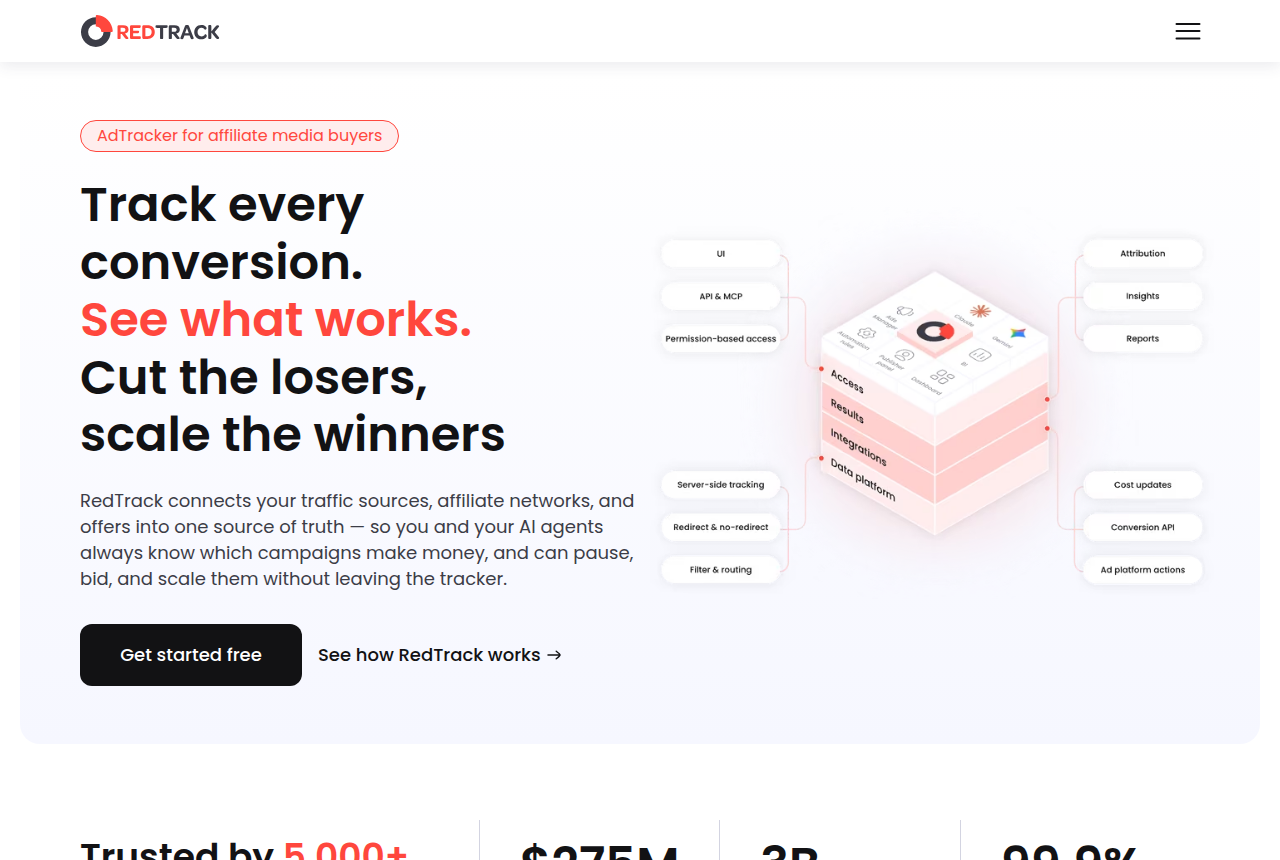
RedTrack's pricing page describes Solo as the plan for one media buyer, with the Conversion API, spend sync and Stop Rules on that plan. Solo includes 5 million events a month and ad-level spend sync every 60 minutes. The same page lists a native Conversion API for Meta, Google, TikTok, Snapchat, Microsoft/Bing, X, Pinterest and OpenAI Ads.
Relay, on that page, is the Shopify tier: one store, a server-sent conversion, and UTM last click. Multi-touch and ad-level spend sync are on Solo. Relay is the tier I would use when the only job is that server post plus last-click UTMs.
Server-side tracking at checkout
The pixel fires in the browser. An ad blocker, or a pay step that never loads the pixel, drops the Purchase, and the campaign then optimizes on a hole.
Shopify's help page on Meta data sharing says Maximum sharing uses the Conversions API. The Purchase event goes from Shopify's server to Meta's server, and a browser blocker cannot stop that hop. Enhanced sharing is the other level on that page that uses the same API.
Michael Dishmon's note on this Shopify setup says Meta deduplicates a pixel event and a server event when the event id and the event name match, and it does that for 48 hours. People implementing the pair aim for a dedup rate of 85 to 95 percent. If the two posts do not share that id, Meta can learn from two sales where the processor recorded one.
RedTrack's network list is on the card above. Hyros's missed-sale send is on its homepage, also above. I would confirm the shared id on whichever of those you post through, using the 48-hour window in Dishmon's note.
How to choose without buying twice
Already inside ClickFunnels: stay with Analytics until a sale you can see at the processor is missing from that screen. Analytics is included in the plan you already pay for. Run the checkout cost calculator on that bill before you add a tracker subscription beside it.
Already inside Checkout Champ: start with the reports the homepage review is praising. A second ledger helps on the day those reports cannot show the campaign on the rebill.
Want a printed price and a Conversion API before any call: RedTrack Solo, with the 14-day trial on the card. Relay is the Shopify case where last-click UTMs and one store are the whole job.
If the buyer pays on a phone order days later, book Hyros. I would still reconcile that dashboard to the deposit, the way those threads do.
My take
I would get the purchase out of the browser, with the shared id from the note above, before I spent a meeting on attribution models. A report that never sees the checkout sale will rank the wrong ad, and no model choice repairs a missing order.
On a funnel you already host, I would read that host's screen first. RedTrack is the add-on when I want the price in writing and a Conversion API on the networks listed above. Hyros is the add-on when the order is a phone close well after the visit. Either tracker still has to agree with what the processor settled.
Next step
Once that purchase post is in place, keep the campaign URL stable while you change the pay step. Use checkout split testing without breaking the ad link.
Frequently asked questions
What should funnel attribution software keep on one customer?
What does server-side tracking at checkout change?
When is RedTrack Relay the wrong tier?
Sources
Written by
Last checked 2026-10-21
Comments
No comments yet. Questions and your own experience are welcome.
Thank you. Your comment will appear once it has been reviewed.