PayKickstart is a checkout, recurring-billing and affiliate platform aimed at people who sell digital products, software and subscriptions and want the cart, the rebills and the referral program running from one account. It is not a page builder and it is not a storefront. You bring the pages; PayKickstart takes the payment, manages the subscription over its life, and tracks and pays the affiliates who send you sales.
Who it fits
The reader this suits has a recurring or continuity offer, or a launch driven by affiliates, rather than a first-time seller who wants a cart live this afternoon. PayKickstart's depth is in the parts that come after the first sale: keeping a subscription alive, recovering a failed card, and paying a network of partners on time. If your business is a one-off digital download with no rebills and no affiliates, most of what you pay for here sits unused, and a simpler cart will do.
For a paid-traffic operator the fit is partial. The conversion levers a media buyer wants at checkout are all here. What is not here is a way to build and split-test the pages in front of the cart, so PayKickstart slots in as the checkout at the end of a funnel you built elsewhere, not as the funnel itself.
The affiliate program is why most people pick it
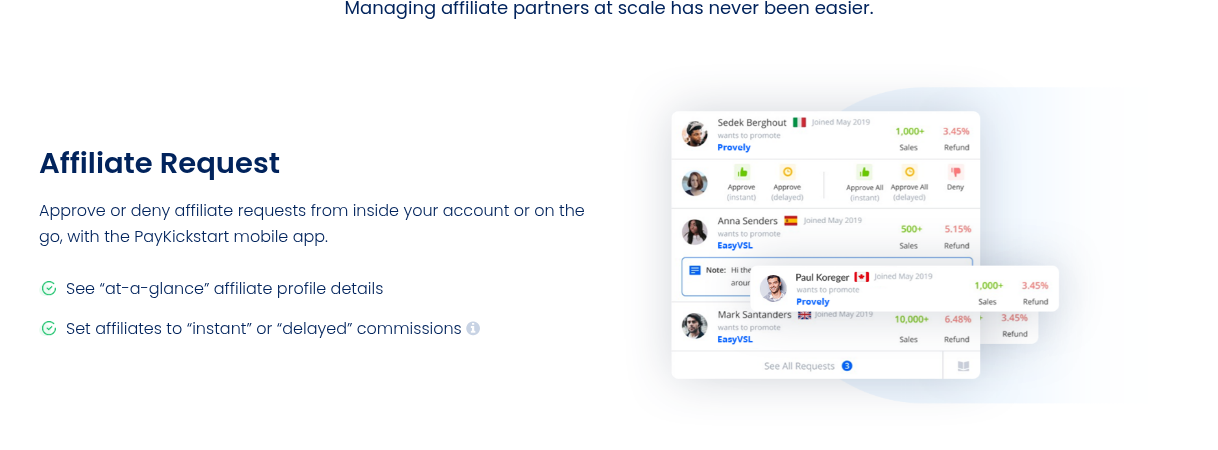
The single feature reviewers name most is the built-in affiliate center. It tracks sales and leads, supports first and second-tier commissions, pays out instantly at the point of sale or on a delay you set, and lists your product in a marketplace PayKickstart says is 100,000 affiliates strong. One G2 reviewer summed up the appeal as a built-in affiliate system that can create coupons, discounts, upsells and order bumps, all in the same cart. For a course or software launch that lives on partner traffic, having the payout tracking sit next to the checkout, rather than in a separate affiliate tool you reconcile by hand, is the whole case for the product.
Two caveats sit under that. First, PayKickstart tracks and can automate commissions, but each vendor is responsible for actually paying their own affiliates, so if you promote someone else's PayKickstart offer, the payout is only as reliable as that vendor. Second, some reviewers report that vendor and affiliate reports do not always reconcile cleanly, so check the numbers rather than trust them.
Checkout and order value
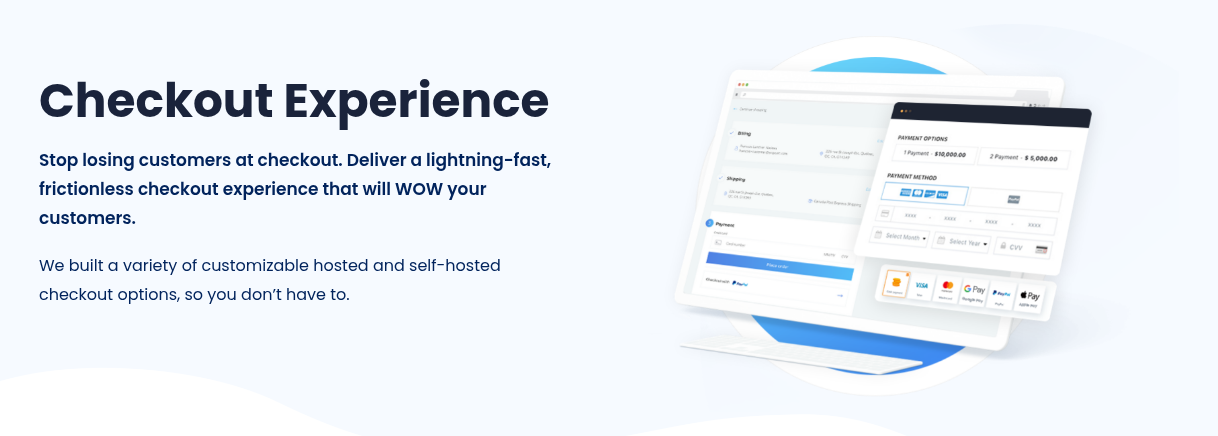
The cart ships the levers that raise average order value: order bumps, true one-click upsells that do not ask for card details again, coupons, exit-intent offers and cart recovery. There is a library of more than 50 hosted checkout templates plus embeddable widgets and pop-ups, so you can host the page on PayKickstart or drop the checkout into a page you already run. Reviewers call the upsell flow a strength, and one described building a complex funnel with upsells, downsells and order bumps on it. These are the same mechanics SamCart and ThriveCart sell on, and PayKickstart holds its own on them.
Subscriptions, dunning and retention
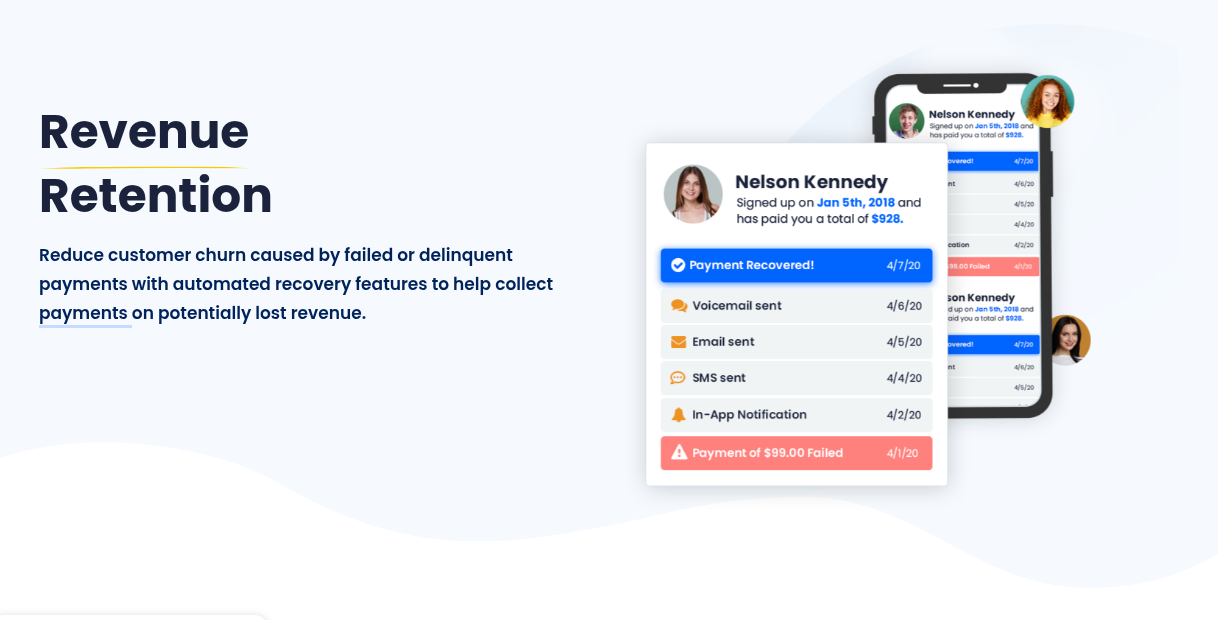
This is where PayKickstart goes deeper than a plain cart. It handles one-off charges, subscriptions, free and paid trials, payment plans, proration, usage-based billing and pick-your-price pricing. When a rebill fails, its dunning sequence chases the customer by email, SMS, voicemail and in-app message, and smart retries re-attempt the charge on a schedule tuned to recover more of them. A cancellation-saver flow intercepts a customer on the way out with an offer or a survey. For a subscription business that recovery layer is revenue you would otherwise lose quietly, and it is the part of the product hardest to replicate with a simpler tool.
Payments and gateways
PayKickstart is not a payment processor and it is not the merchant of record. It sits on top of your own gateway. You can connect Stripe, PayPal, Authorize.net, Braintree or Easy Pay Direct, or apply for Connect, PayKickstart's own processing service, which it says can approve you quickly and process from 2.3% plus $0.20. Connecting more than one gateway gives you more payment flexibility than a single-processor cart, though this is choosing which gateway handles a product rather than the automatic load-balancing across many merchant accounts that a high-volume, high-risk operation needs.
The catch
Two things temper the recommendation. The first is setup. The depth that makes PayKickstart worth it also makes it slow to configure. Reviewers describe a learning curve, one calling it plainly a bear to configure, and the reporting is named as an area that needs work. Budget real hours, or take the free migration and onboarding help the vendor includes. The second is that PayKickstart is not the seller of record. Refunds, tax and support are your job, and because the platform is not a party to the sale, buyer-side complaints about charges and cancellations tend to land back on the vendor. That is normal for a checkout layer, but it is why the buyer-facing Trustpilot score is low even while seller reviews on G2 and Capterra run high.