Paddle is the pick if you sell software, SaaS or a digital product and want sales tax, VAT and compliance handled for you as Merchant of Record. If you sell physical products, supplements or a business opportunity, Paddle's own rules rule you out before price ever enters the decision.
You have heard the name in a founder community or seen it at the bottom of a checkout, and you want the plain answer: is Paddle real, and will you regret buying it? Real, yes. Paddle has operated since 2012, reports more than 10,000 customers, and says it has processed over 190 million transactions. The regret question is not really about whether the software works. It is about what you sell, because for a large share of the people reading this site, Paddle decides the matter before pricing even comes up: it will not take your business.
What Paddle actually is
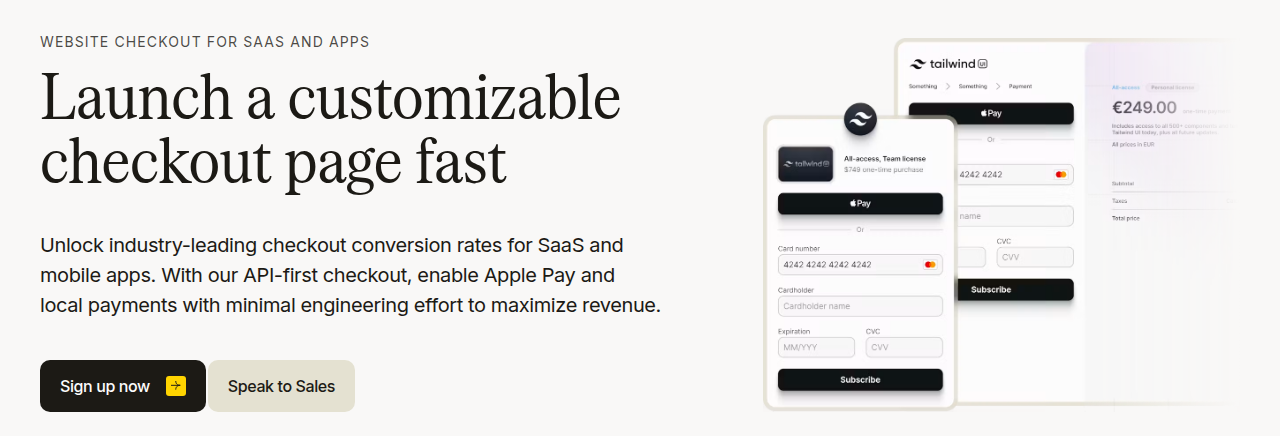
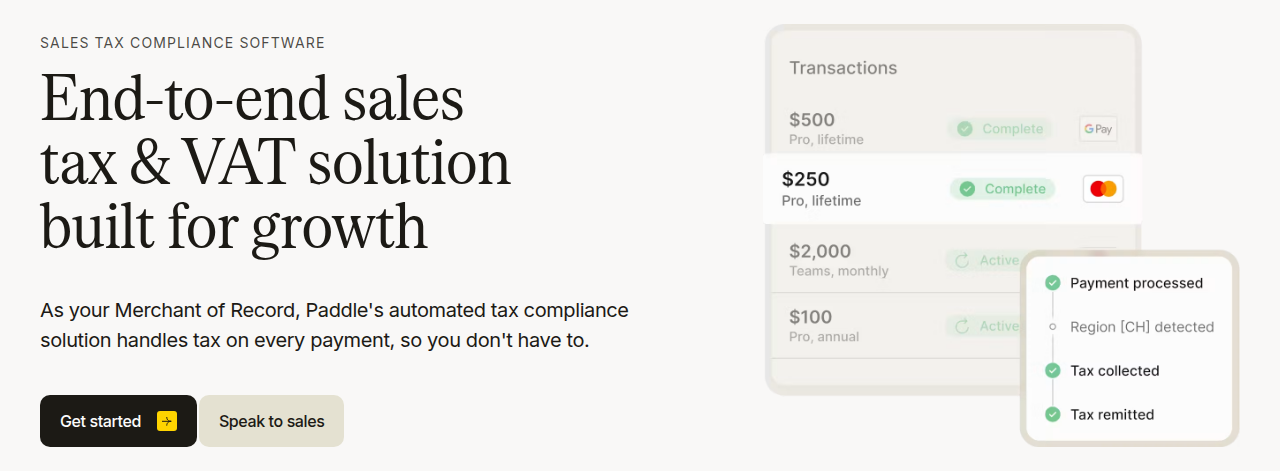
Paddle is a Merchant of Record, not a payment gateway and not a funnel checkout. That distinction is the whole thing. When you use Stripe or a checkout builder, you are the seller and the legal and tax responsibility for every sale is yours. When you use Paddle, Paddle becomes the seller of record to your buyer. It runs the checkout, processes the card, manages the subscription, handles fraud and chargebacks, recovers failed payments through its Retain product, and, most importantly, collects and remits sales tax and VAT in your buyer's country on your behalf.
For a software company selling into dozens of countries, that last part is the reason to look at Paddle at all. Sales-tax and VAT registration across the EU, the UK, and a growing list of US states is real, ongoing accounting work. Paddle absorbs it. You get one payout and one relationship instead of a filing calendar in a hundred jurisdictions.
Who it is built for, and who it turns away
This is where a trust review has to be blunt, because Paddle is. Its Acceptable Use Policy states it plainly: "Paddle is built to serve software companies (including B2B SaaS, Consumer Software, and Games). If your company's primary offering is human services (such as consultation, support, or design services) or the sale of physical goods, Paddle is not a good fit for your needs."
The prohibited-categories list goes further, and it reads like a map of what this site's audience tends to sell. Physical products or anything that requires physical delivery: prohibited. Medical advice, named specifically to include weight loss and muscle building, which is the supplement and nutra world: prohibited. Business or investment opportunities: prohibited. Gambling, adult content, and marketing schemes including MLM and get-rich-quick: prohibited. Coaching and pure consulting, unless attached to a software product: prohibited.
If you run paid traffic to a supplement offer, a physical product, or a business-opportunity funnel, none of what follows about pricing or support matters. Paddle is not an option for you, and any comparison that puts it next to a funnel or checkout builder for that job is comparing two different tools. Paddle is for people selling software and digital products. Inside that lane it is one of the strongest choices there is. Outside it, the account application is a dead end.
What it costs, and why it is more than Stripe
Paddle is pay-as-you-go: 5% + 50c per checkout transaction, with no monthly fee and no migration fee. Set that beside Stripe's 2.9% + 30c and it looks expensive, and founders on Hacker News say so. The fairer read is that it is not the same product. Stripe is card processing; to match Paddle you would add tax software, your own compliance work, dunning, and buyer support, and the gap narrows. Whether Paddle is worth the premium comes down to one question: is global tax compliance a real burden for you, or a box you can tick with a cheaper tool? If you sell mostly domestically, the honest answer is often that you do not need a Merchant of Record yet.
Two costs are easy to miss. The fixed 50c per transaction is painful on low-ticket products, which is why Paddle asks sub-$10 sellers to arrange custom pricing. And payouts are monthly rather than on demand: your balance settles after month-end and lands around the 15th, so plan cash flow around that, not around a daily deposit.
The risk worth weighing: account reviews and held payouts
The most serious pattern in long-term feedback is not about features. It is about account risk. Founders describe opaque risk reviews that end in suspension or closure, sometimes with little explanation, and with payouts held afterward while they are still on the hook for customer refunds and active subscriptions. One widely shared r/SaaS thread is titled, simply, a warning to other founders. Another tells early-stage builders not to use Paddle at all, after being asked for processing history that a brand-new company cannot have and then rejected.
Context matters here. In June 2025 the FTC announced that Paddle would pay $5 million to settle allegations tied to unfair payment-processing practices and the facilitation of deceptive tech-support schemes. A Merchant of Record that has just been through a regulatory settlement has every incentive to underwrite harder and to say less when a risk decision goes against a seller. That is the trade you accept when a third party becomes the legal seller of your product: it carries the liability, so it holds the controls.
None of this makes Paddle a bad company, and its aggregate ratings are decent, near 4.6 on G2 and 3.9 on Trustpilot. It makes Paddle infrastructure you should not build on blindly. Paddle itself says there is no lock-in and that your data is yours to move. Take that at face value and design for it: abstract your billing code, export customer and subscription data regularly, keep a cash buffer, and know how you would move active subscriptions to another provider inside a few days if you had to.
Where it fits, and where we would look elsewhere
If you sell software, a SaaS product, or a digital download to customers around the world, Paddle is a genuinely strong pick, and the tax offload alone can justify the fee. Get written confirmation that your exact product and marketing are allowed before you integrate deeply, keep a backup, and go in.
If you sell anything physical, any supplement, or any business opportunity, Paddle is the wrong door, and it will tell you so on the application. Your like-for-like alternatives are other Merchant-of-Record platforms built for digital goods, such as Lemon Squeezy or FastSpring, which sit outside what this site ranks. And if what you actually need is a checkout and funnel that converts paid traffic to an offer, that is a different category entirely, and it is the one the rest of this site is about.