Kartra is the pick if you are a coach or creator who wants pages, email, checkout, courses and memberships on one login, and you can live with a slow builder. It is not built for paid-traffic direct response, where same-URL split testing and payment routing matter more.
If you have heard Kartra's name in a coaching group or a YouTube ad and you are trying to work out whether it is the real thing or another platform that over-promises, here is the short version. Kartra is real, it has been around since 2018, and Kartra says more than 60,000 businesses run on it. Whether you regret buying it depends almost entirely on what you sell and how you get your traffic.
This site ranks checkout and funnel software for teams that point paid ads at an offer. Kartra is not built for that reader first. It is built for coaches, consultants and course creators who want to stop paying for six tools and instead run pages, email, checkout, courses and a membership site from one login. Judged as that, it is a capable, honest product. Judged as a paid-traffic checkout, it is the wrong shape, and this review says exactly where the line is.
What Kartra actually is
Kartra bundles the pieces a knowledge business needs to sell online: a drag-and-drop page and funnel builder, email and SMS with automations, checkout pages with order bumps and one-click upsells, memberships and courses, video hosting, calendars, an affiliate center, a helpdesk and a light CRM. The pitch is consolidation. Instead of stitching a page builder to an email tool to a course platform to a checkout, you run all of it on one account where every part already talks to the others.
That pitch is genuine. The FAQ on Kartra's own site lists the dozen or so tools it aims to replace, and for a solo coach the maths often works: one bill instead of five, one login instead of five, one support team instead of five. The catch is the one every consolidated platform carries. Doing everything means trading some depth in each area for the convenience, and Kartra is no exception.
Who it is built for, and who it is not
Kartra's whole marketing points at one buyer: the expert going digital. Coaches scaling out of one-to-one work, consultants packaging a framework, wellness pros and authors building an evergreen course. If that is you, Kartra is squarely in your lane, and its closest rivals are Kajabi and, for the checkout piece alone, ThriveCart and SamCart.
If you are a media buyer running cold paid traffic to a single direct-response offer, Kartra is not the tool the leaders in that world reach for, and the reasons are specific rather than a matter of taste.
Where it fits for paid traffic
Two features decide whether a checkout platform holds up under real ad spend, and Kartra has neither in the form a scaling media buyer needs.
The first is same-URL split testing. Kartra has A/B testing, but the way paid-traffic teams protect their ad learning is to rotate variants under one link so the ad platform never sees a redirect. Kartra's testing is page-level, not a server-side rotation of whole checkouts under one URL. The second is payment routing. Kartra connects a processor such as Stripe, and its checkout is single-processor by default. It does not spread volume across several merchant accounts, which is what high-volume sellers rely on so that one payment hold does not stop all revenue at once.
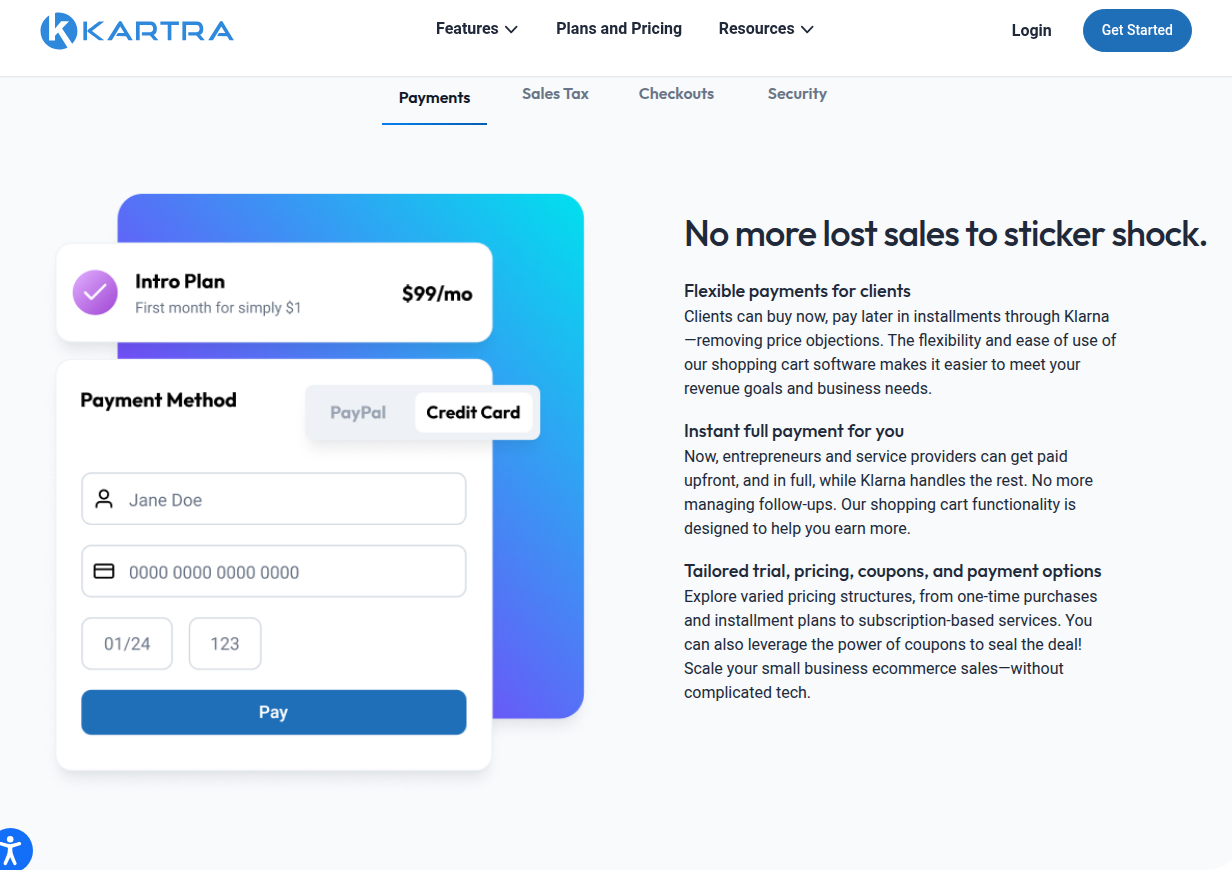
What Kartra does have on the checkout is real: order bumps, one-click upsells, coupons, custom fields, subscription billing and, from the Starter plan up, no platform fee on your sales. For a coach selling a course and an upsell, that is plenty. For someone pushing five figures a day of cold traffic across accounts, it is not the engine.
Courses, memberships and email
Where Kartra earns its keep for its target buyer is the back half of the business. The membership and course builder is drag-and-drop, with drip scheduling, progress tracking and gated access, so you can deliver a program without a separate learning platform. Email and SMS are built in with automations, tagging and behaviour triggers, which for many coaches removes the need for a standalone email tool. Deliverability is the usual caveat: users report it works when you authenticate your domain and keep your list clean, and suffers when you import cold lists, which is true of every sending platform and not unique to Kartra.
The builder is the recurring complaint
The most consistent thing long-term users say is not that a feature is missing. It is that the page builder is slow. One Trustpilot reviewer who had used Kartra for years put it flatly: "Page builder is so slow and laggy." Reddit users echo it, calling the platform capable but clunky and warning that simple edits can take longer than they should. Kartra's own release notes back this up, with repeated fixes to builder stability and drag-and-drop, which tells you it is a known friction point they are working on rather than one that is solved.
Support is the other repeated gripe. Multiple long-term customers report responses taking days, and some issues left open for weeks. Even users who like the product describe support as slow but helpful.
What long-term users like
The praise is almost always about consolidation and control. A user in r/Entrepreneur summed up the trade honestly: Kartra "allows you a lot of control over discount codes" and pricing options, and "it is clunky but you can Youtube pretty much anything you want to do, and if you have issues, their support has been slow but helpful." People who stay tend to stay because rebuilding a membership site and funnels somewhere else is a large job, and because one system beats juggling five.
What it costs, in short
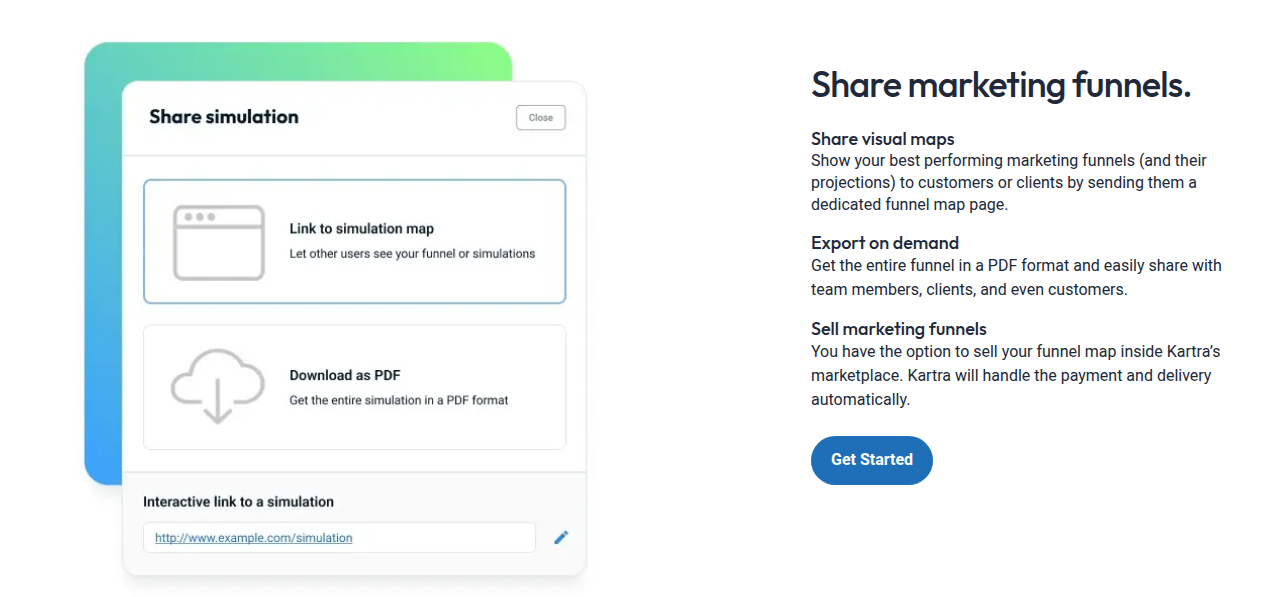
Kartra runs four tiers. Essentials at $59 a month is the headline price, but read the limits before you sign: it charges a 5% fee on your sales and caps you at one product, five pages and 500 contacts. Starter at $119 a month is where most people actually start, because it drops the sales fee to 0% and lifts the page, product and course limits. Growth at $229 adds automations, affiliates and funnel simulation, and Professional at $549 adds real-time funnel analytics and API access. Annual billing saves up to about 22%, and there is a 14-day trial plus a 30-day money-back guarantee. The full breakdown is in the table below and on our Kartra pricing page.
Bottom line
Kartra is real, it is stable enough that people run six-figure course businesses on it, and it is not a scam. If you sell courses, coaching or memberships and you want one login instead of a stack, it belongs on your shortlist next to Kajabi, and you can weigh the checkout against the alternatives. If you run paid traffic to direct-response offers and you need same-URL split testing or payment routing, look at the platforms built for that instead. The regret people report is rarely that it did not work. It is that the builder was slow or support took a week, so go in expecting a learning curve and test the full flow during the trial before you move your business onto it.